Categories
Community Partnership

Careers of the future are made in Choffin’s new advanced manufacturing lab

Choffin Career and Technical Center’s new advanced manufacturing lab is a major step forward in preparing future generations for the workforce, and MVMC helped make it possible.

The media was invited to an official unveiling ceremony on August 27. Through funding from the state, MVMC contributed $10,000 to relocate AMATROL equipment from East, Chaney and Wilson high schools and transform an old storage space into a state-of-the-art lab.

Where learning gets real

At least 35 seniors and 15 juniors are enrolled in the program for the 2025-2026 school year. They’re getting hands-on, high-tech training in areas like robotics, pneumatics, electrical and programmable logic controls (PLC).

“Youngstown has been a little bit of a desert with the advanced manufacturing side of our industry,” said Dr. Michael Saville, director, Choffin Career and Technical Center. “Bringing this under the career-tech umbrella gives it the full support, structure and accountability it deserves and connect students to the industry.”

MVMC exists to strengthen the education-to-workforce connection.

“When you talk to manufacturers, their biggest need is people who can keep machines running, who understand how to troubleshoot and improve operations. That’s what this lab is all about,” said Alex Hertzer, MVMC Executive Director.
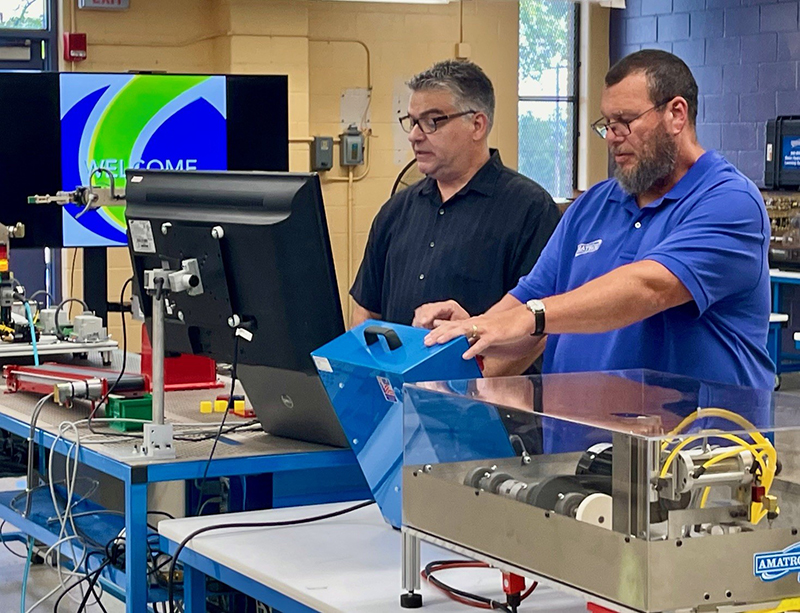
The course was originally offered in the Youngstown schools as a 45-minute elective. Now, that’s changing with the program at Choffin.

“We now have two-and-a-half-hour sessions,” said Jim Alexi, lab instructor. “We have time to teach the skills that really stick, and these students are getting job ready.”

Skills that meet the moment

Students can earn industry-recognized credentials that help them stand out in the job market.

Hertzer added that mid-skill careers, such as maintenance technicians and entry-level engineers, are vital to production lines.

“The skills students are going to learn in this room are cross-cutting sectors. Whether it’s food production, steel or aerospace, these are capabilities that employers need right now,” he said.

The lab is more than just a classroom. It’s a working replica of a modern shop floor with equipment that technicians would use every day.
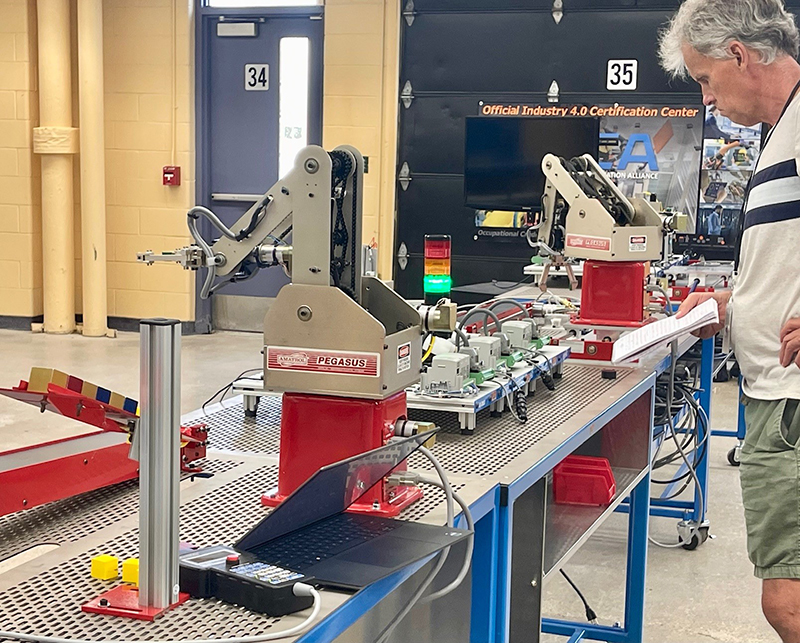
Along with the concepts of Industry 4.0, students are getting lessons beyond that.

“We’re moving toward Industry 5.0, incorporating artificial intelligence into these systems,” said Patrick Dinapoli, lab instructor. “Students are getting early exposure to the technologies that will define the next generation of manufacturing.”

Education to workforce connection

MVMC members are also intrigued by the lab. Representatives from Schwebel’s were there to check out the space and expressed the desire to engage with students going through the program.

“We need this generation to understand what work means and looks like,” said Melinda Rombold, HR director, Schwebel’s. “Workforce development is so critical, and not just on the technical side. We spend a lot of time talking about job readiness, and programs like this are exactly what we need.”

Creating a direct pipeline from the classroom to career has never been more urgent, and MVMC is committed to that effort.

“We couldn’t pass up the chance to support a program like this,” Hertzer said.

While it’s been a great start for Choffin, leaders are looking ahead to a promising future.

“We’re actively promoting the program and expect enrollment to grow in the coming years as more students see the opportunities this training opens up,” Saville said.
Categories
Community Partnership

Learning by doing: TCTC industrial tech students build skills that open doors

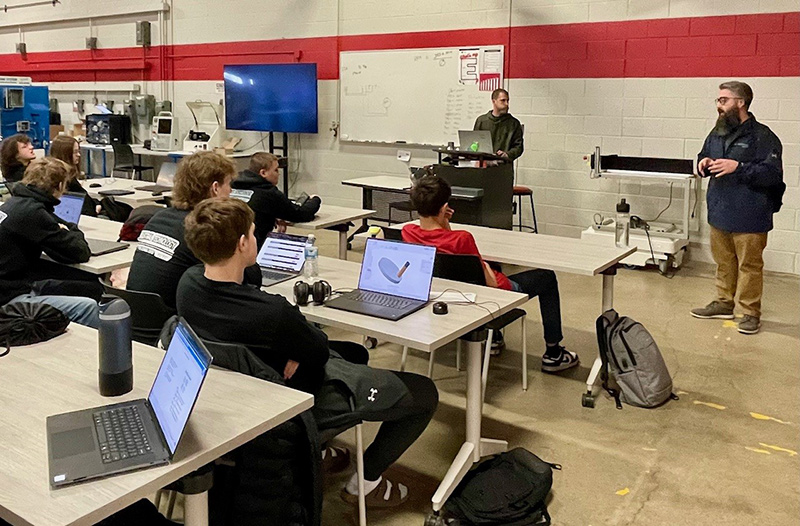
The inaugural class for the industrial technology program at Trumbull Career and Technical Center will take skills learned in the classroom into real life after graduation.

It’s designed to give students hands-on experience in machining, robotics, electrical systems, automation, and more. These skills stand out for employers looking to hire.

“This program is a huge advantage for students,” said Alex Hertzer, MVMC executive director. “They’re not just learning about manufacturing – they’re doing it. That experience could change the trajectory of their lives.”

A well-rounded foundation

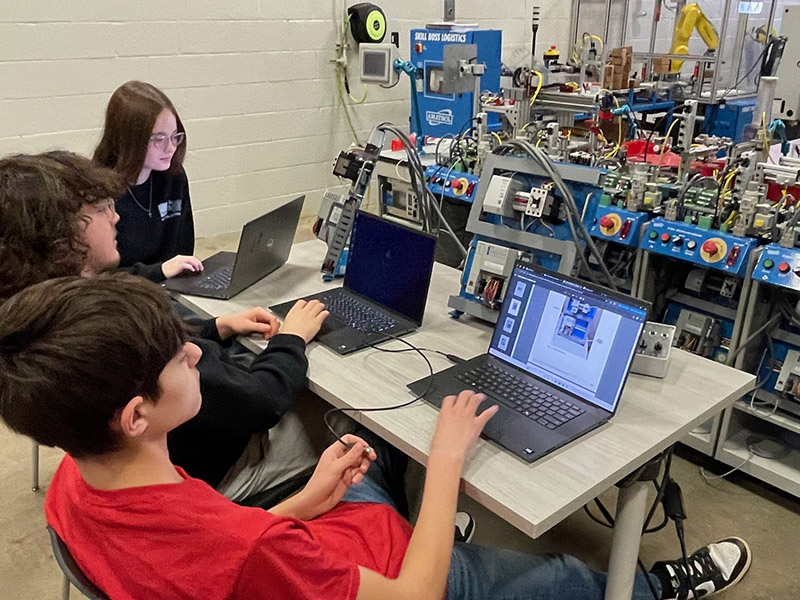
There are several stations that students rotate through in the program. Each one builds critical industry skills.

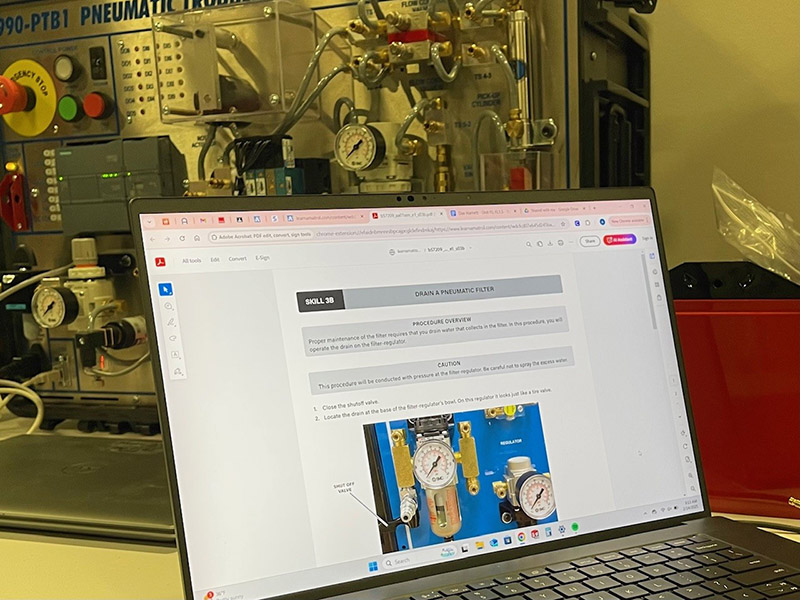
For example, the machining area introduces students to manual and CNC machining. They also interact with programmable logic controllers (PLCs), pneumatics, hydraulics and electrical systems.

“The goal is to expose them to everything. A lot of students come in not knowing exactly what they want to do,” said John Pettit, TCTC industrial technology instructor. “Here, they get a taste of multiple career paths before deciding where they want to specialize.”

Dirt bike repairs develop real-life skills

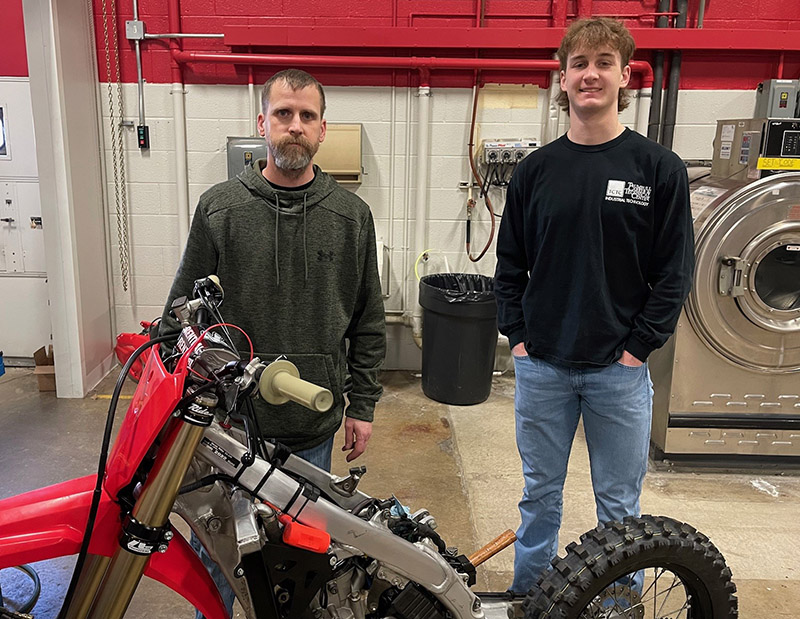
Ryan Church has a passion for motorsports. He’s interested in machining, but when his dirt bike’s suspension needed repaired, he realized how well it connected to the hydraulics lessons in class.

“After I got this bike, it was stolen. When I got it back, the suspension was completely shot,” he said. “I talked with Mr. Pettit, and he told me the suspension falls under hydraulics, so we went through that material and redid my whole suspension.”

Beyond fixing his bike, Ryan sees the long-term value of these skills. His family owns Church Boys Racing, a shop specializing in Chevy Nova front-end parts. Ryan hopes to eventually bring more machining work in-house.

“If I need something made, I can do it,” he said. “That’s what I love about machining.”

Best of both worlds

For some students, like Dax Harnett, college remains a first choice after graduation. However, he finds value in learning about machining.

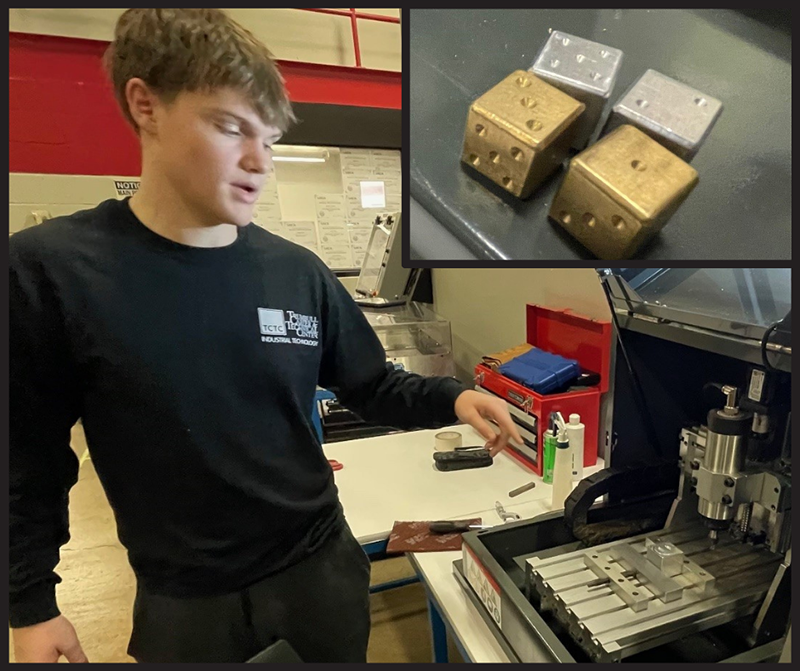
One of his favorite projects was crafting a set of metal dice.

“Even if I don’t go into machining as a career, I know this experience is going to help me,” he said. “It teaches problem-solving and attention to detail—things that are useful no matter what I do.”

Aleia Lambert ultimately wants to attend college as well – but is focused on robotics in the program. She has family members with a background in the trades, so the industry has always been familiar.

“I love robotics, and I know this experience will help my journey, wherever that ends up leading,” she said.

Being the only female in the program isn’t getting in her way either.

“She’s proving that manufacturing isn’t just for guys, it’s for anyone who’s willing to learn and put in the work,” Pettit said.

Programming success

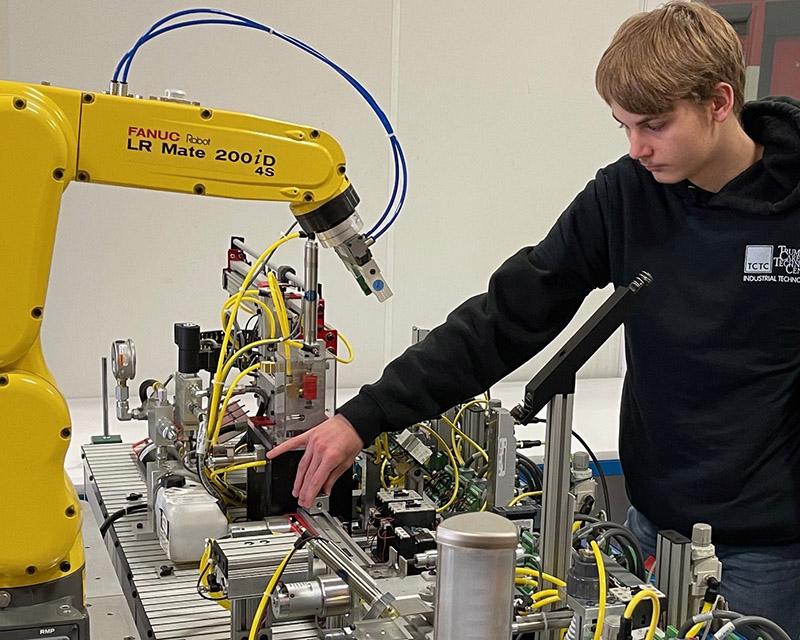
Automation is where Tristan Peterson shines – especially with programmable logic controllers (PLCs).

He’s already earned seven industry-recognized certifications – putting him ahead of many job seekers right out of high school.

“It’s a lot, but once you jump in, it starts to make sense,” Peterson said. “Even if you don’t go into programming, just being able to understand how these systems work is huge. It’s the future of manufacturing.”

PLCs are used in industrial automation to control machinery and processes. Pettit sees a growing demand for students like Tristan.

“Industry needs people who can troubleshoot and program automation systems. Students who develop those skills will have opportunities right out of high school,” he said.

A career-ready future

Along with Peterson, a few other students will graduate with multiple industry-recognized credentials, making them highly competitive in the job market.  

“We know that manufacturing careers today are high-paying, high-tech, and in high demand,” Hertzer said. “For some students, this program is a direct path to a great job right after high school, and for others, it’s a strong foundation for further education. Either way, they’re getting a huge head start.” 

sFor industrial technology students, the future isn’t just something they’re planning for, it’s something they’re actively building, one project at a time.

Categories
Community Partnership

Manufacturing Yields Friendly Competition

With just a few steps inside the America Makes building in downtown Youngstown, it’s easy to justify why a partnership with the Mahoning Valley Manufacturers Coalition makes sense. There’s a modern manufacturing atmosphere, and both organizations are committed to various adult and youth outreach efforts.


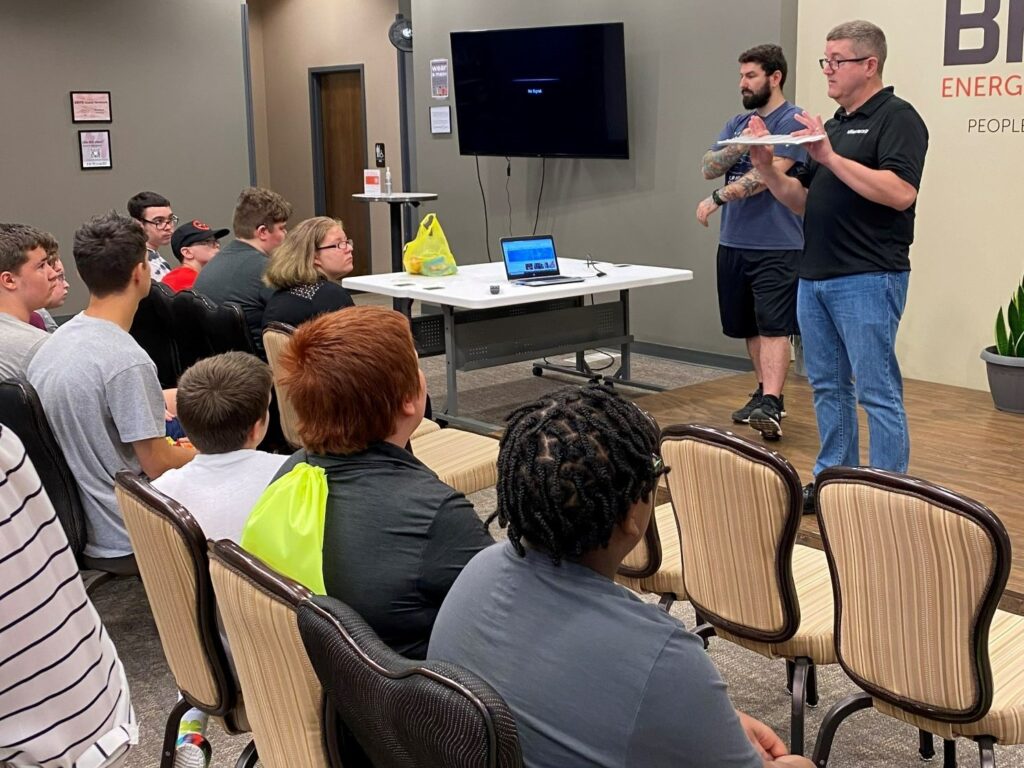
The collaboration started more than year ago, and recently, the MVMC had the chance to be involved with students in the Additive Edge program through America Makes. MVMC senior project manager Alex Hertzer did presentations for 8th graders from Poland Middle School, as well as freshmen and sophomores from Mahoning County Career and Technical Center and Valley STEM + ME2 Academy about opportunities in manufacturing careers.


He talked to students about jobs right after high school or using manufacturing to gain experience for a future career. Hertzer explained positions like welding, machining and robotics and how they range from entry-level, supervisor and engineering. He said some of the students were hearing about the positions for the first time and were amazed at how easy it is to get into a manufacturing career.


“The thing I tried to stress was that both skilled trades and college are great career pathways. I think it’s important for students to understand they can have the best of both worlds,” Hertzer said.


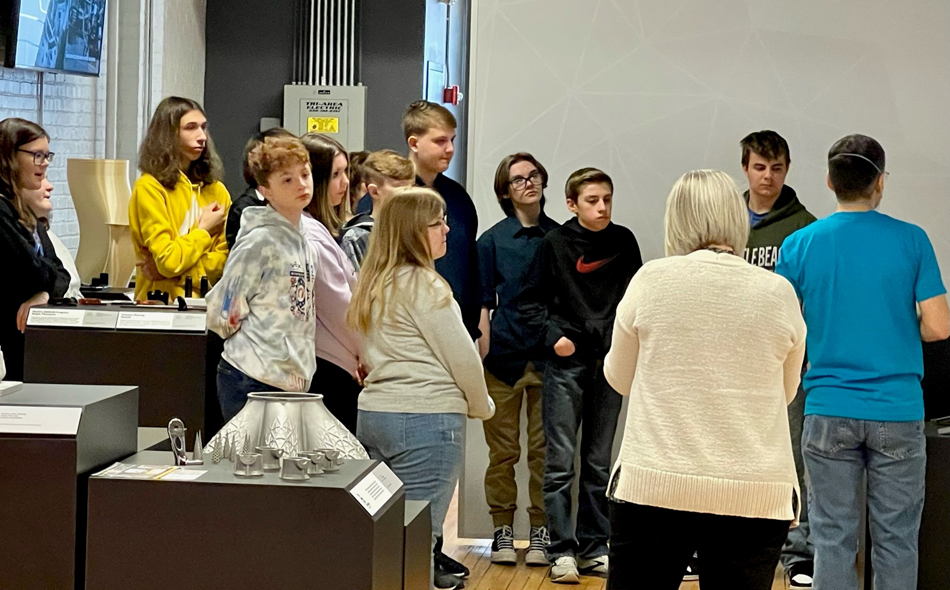
Before the presentation, students toured America Makes to get a firsthand look at opportunities in additive manufacturing. They learned about various projects and what they are used for in several industries.


Here’s the pitch
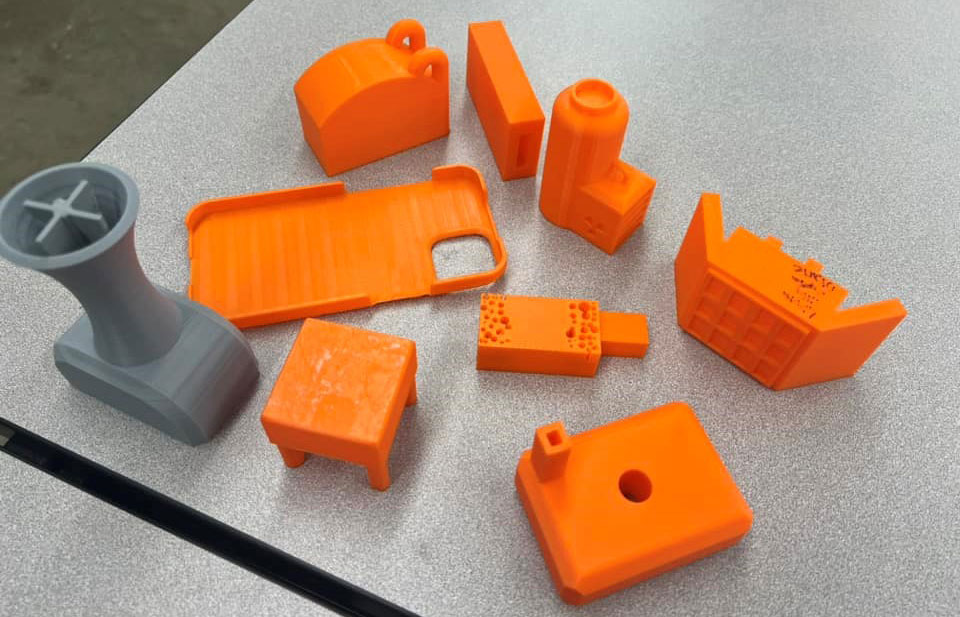
The Additive Edge is an entrepreneurship program students take part in for several weeks. It focuses on engaging them with education and career pathways in the advanced manufacturing sector. They work in teams to identify a real-world problem, develop a 3D printing-based solution, build a business model, and then pitch the idea to a panel of judges.


MVMC project manager Allison Engstrom was one of the judges for pitch day in early March. Freshmen and sophomores from two science classes presented their creations for the program.

She was impressed by a team that came up with an idea that affects almost everyone these days.


“My favorite was a group of young men whose product was a 3D printed phone case that would utilize solar panels to charge the phone,” Engstrom said.

Schools participating in the Additive Edge program can use it in a variety of ways. They can choose a daily activity for several weeks, once a week for a semester, or a bootcamp-style course that’s completed in one week. Teachers also take a training with an America Makes team member before the school’s program begins. Once completed, America Makes attends the students’ final pitch day.


Part of the bigger picture
Additive Edge is only part of what America Makes offers when it comes to education and training for various sectors across the country. Education and Workforce Development Director Josh Cramer says the “K-through-Grey” approach engages all talent nationwide for advanced manufacturing and STEM.


“That means reaching elementary, community colleges, post-secondary schools, underutilized talent and all the way to the Department of Defense,” Cramer said.


He stresses it’s about finding that pathway for a talent stream and making sure people know they can step in to learn at any time.


“This is where the collaboration with the MVMC comes in to ensure we’re here together to increase awareness and pathways to create linkage to local industries,” Cramer said.


He says there will be a $1 million facility going in at the Eastern Gateway Community College for added innovation. Work is expected this summer with the grand opening set for late fall. Cramer says the focus is about building in a curriculum. There is also an additive lab planned for OH WOW! Children’s Center for Science and Technology.


Cramer says there’s a constant need for training programs, apprenticeship frameworks, youth outreach supports and teacher education in the K-through-12 space.


“As technology advances, we’re going to have a need to upscale manufacturers and workforce,” Cramer said. “We’re all focused on wanting to make the Mahoning Valley a place to live, work and be successful.”

Categories
Community Partnership

MVMC helps build Valley manufacturing summer camps

As summer rolls on, so do different summer camps across the Mahoning Valley.


Among those are a handful with manufacturing- and STEM-based elements, in which the Mahoning Valley Manufacturers Coalition is helping.


“We have had identified several summer camps across Mahoning, Columbiana and Trumbull counties that attract a variety of students with the common goal of opening their eyes to manufacturing, and we’re thrilled to support them,” said Allison Engstrom, MVMC project manager.


Students have been touring local manufacturing facilities, listening to career ambassadors talk about manufacturing careers and take part in hands-on activities.

Starting the conversation early

So far this season, MVMC has supported a Trumbull County Technical Center  camp financially and Trumbull County Educational Service Center camp by organizing manufacturing tours and hands-on activities.

Students tour the BRITE facility.
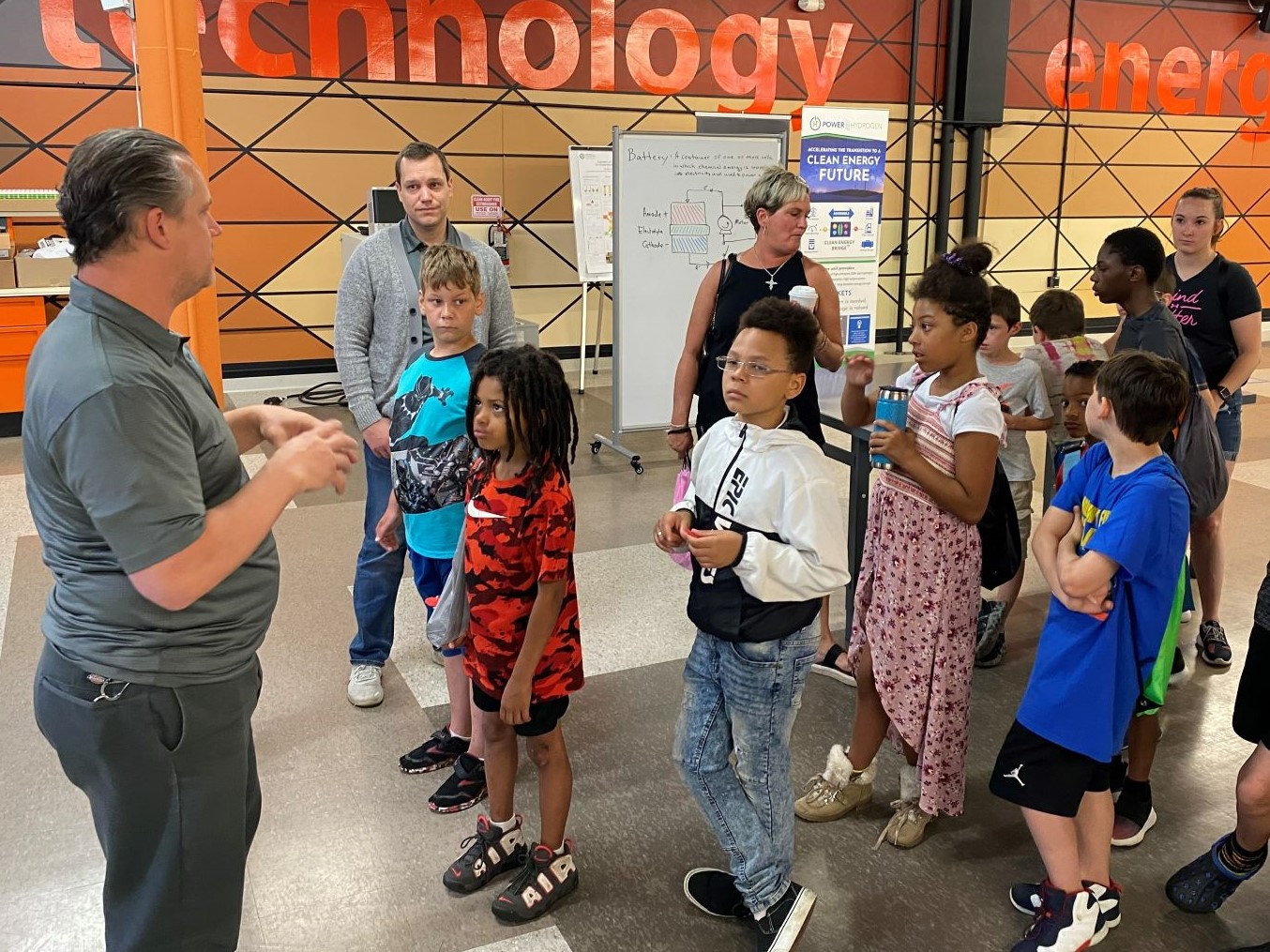
Students from Trumbull County tour the BRITE Energy Innovators in Warren as part of a STEAM-based summer camp.


MVMC associate member BRITE hosted students from the Liberty Learning Center and TCESC summer camp.


“We had a variety of grade levels and they all enjoyed our lessons about batteries along with a tour of BRITE’s lab space,” said Joe Paloski, operations manager of BRITE.


During their visit, students “enthusiastically” learned about the company’s Wet Lab, Io Lab, microgrid and battery testers, Paloski said.


“They loved connecting the battery circuit to the motor to make it run. The kids asked great questions about whether we meet Elon Musk to cell phone charging and building RC cars. Their engagement made the lesson even more interactive and fun,” Paloski said.


Students from the Engineering Camp at TCTC were joined by City Machine Technologies’ Claudia Kovach.


She spoke to children and led them in an activity – trying to put a wooden skewer through a blown-up balloon without it popping.


“There are plenty of great careers that just require a little bit of schooling or a certification,” Kovach said.


“For so long, teachers and schools always say ‘go to college,’ and here at CMT, we are just letting the kids know there are opportunities in manufacturing,” she added.

Looking to the future

It’s one of MVMC’s goals for students to leave summer camps with an understanding of what manufacturing is, Engstrom said.


“We want to show the variety of STEM-based career opportunities in the industry right here in the Mahoning Valley,” she said.


The manufacturing industry “has and will always be important,” Paloski said.

Chris Allen of Ultium talks with students.
During a tour at BRITE Energy Innovators, Chris Allen, human resources manager of Ultium Cells, talks with students.


“It’s great for children to learn about it so they can appreciate the things they have even more, potentially even seeking a future career in manufacturing.”


These summer camps are another way to introduce youths to “grow in areas they already love or learn about an area of STEM that they’ve always been interested in,” said Shelby Russell, TCTC welding instructor.

Coming up

There’s still time to help with three more summer camps:


If members are interested in volunteering for upcoming summer camps, email Engstrom at Allison@mahoningvalleymfg.com.