


The inaugural class for the industrial technology program at Trumbull Career and Technical Center will take skills learned in the classroom into real life after graduation.
It’s designed to give students hands-on experience in machining, robotics, electrical systems, automation, and more. These skills stand out for employers looking to hire.
“This program is a huge advantage for students,” said Alex Hertzer, MVMC executive director. “They’re not just learning about manufacturing – they’re doing it. That experience could change the trajectory of their lives.”
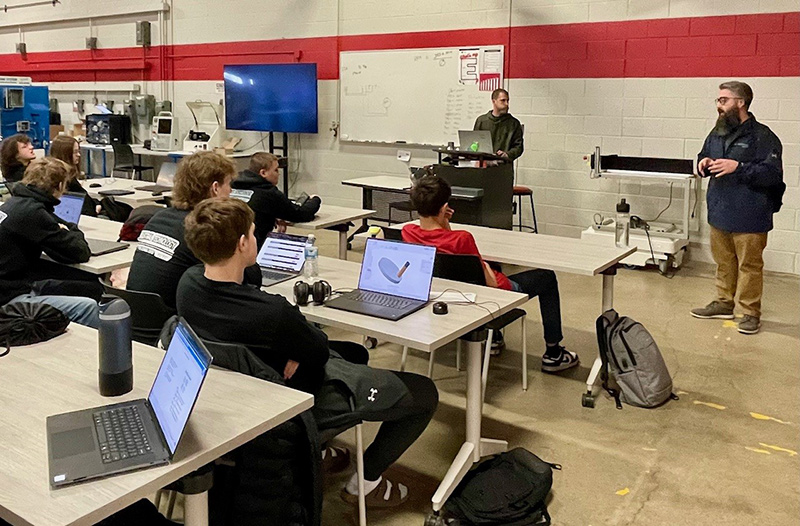
A well-rounded foundation
There are several stations that students rotate through in the program. Each one builds critical industry skills.
For example, the machining area introduces students to manual and CNC machining. They also interact with programmable logic controllers (PLCs), pneumatics, hydraulics and electrical systems.
“The goal is to expose them to everything. A lot of students come in not knowing exactly what they want to do,” said John Pettit, TCTC industrial technology instructor. “Here, they get a taste of multiple career paths before deciding where they want to specialize.”
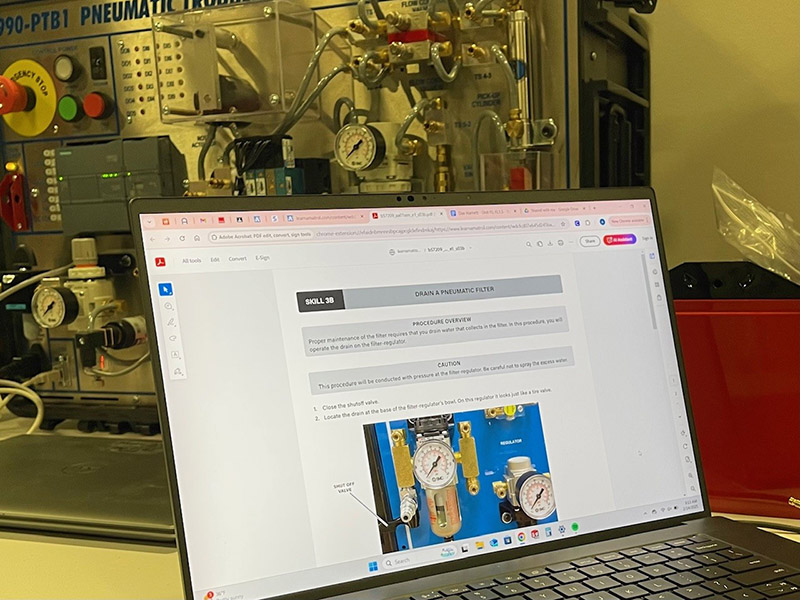
Dirt bike repairs develop real-life skills
Ryan Church has a passion for motorsports. He’s interested in machining, but when his dirt bike’s suspension needed repaired, he realized how well it connected to the hydraulics lessons in class.
“After I got this bike, it was stolen. When I got it back, the suspension was completely shot,” he said. “I talked with Mr. Pettit, and he told me the suspension falls under hydraulics, so we went through that material and redid my whole suspension.”
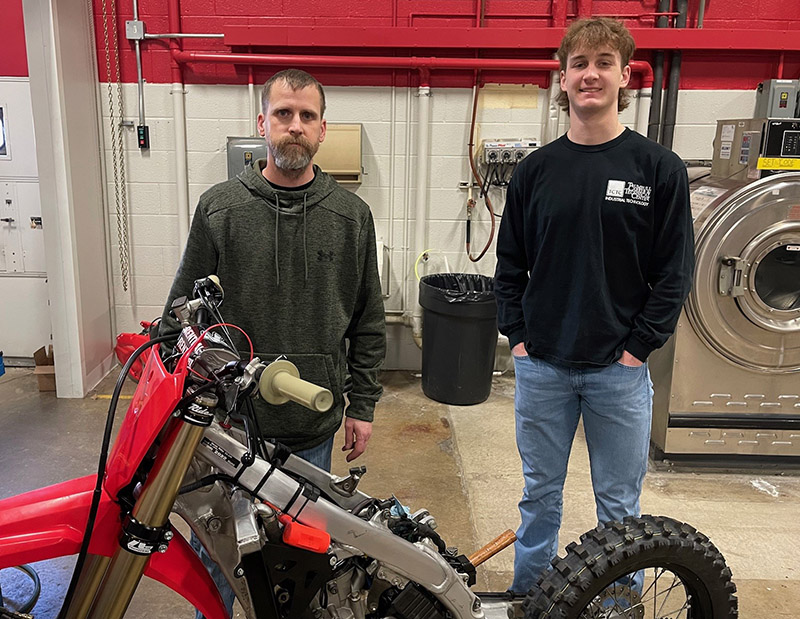
Beyond fixing his bike, Ryan sees the long-term value of these skills. His family owns Church Boys Racing, a shop specializing in Chevy Nova front-end parts. Ryan hopes to eventually bring more machining work in-house.
“If I need something made, I can do it,” he said. “That’s what I love about machining.”
Best of both worlds
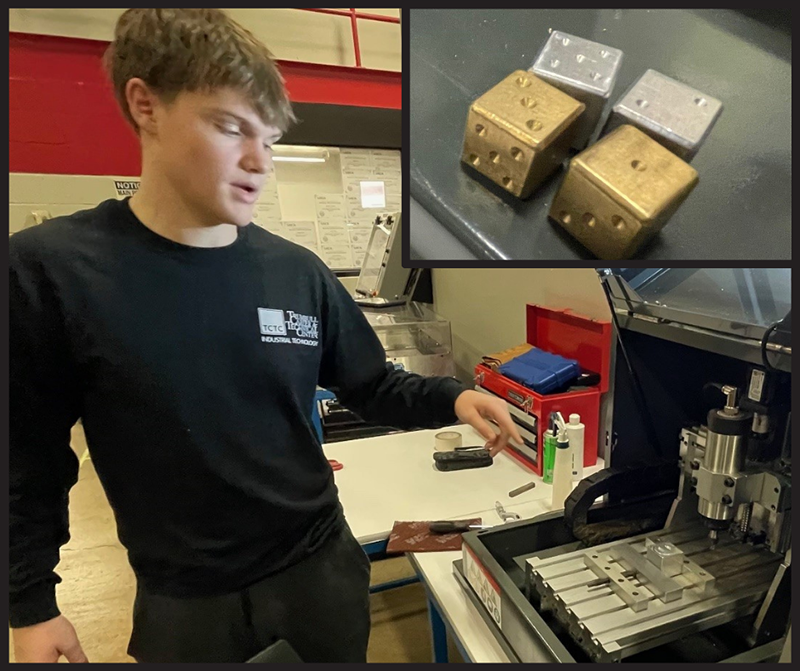
For some students, like Dax Harnett, college remains a first choice after graduation. However, he finds value in learning about machining.
One of his favorite projects was crafting a set of metal dice.
“Even if I don’t go into machining as a career, I know this experience is going to help me,” he said. “It teaches problem-solving and attention to detail—things that are useful no matter what I do.”
Aleia Lambert ultimately wants to attend college as well – but is focused on robotics in the program. She has family members with a background in the trades, so the industry has always been familiar.
“I love robotics, and I know this experience will help my journey, wherever that ends up leading,” she said.
Being the only female in the program isn’t getting in her way either.
“She’s proving that manufacturing isn’t just for guys, it’s for anyone who’s willing to learn and put in the work,” Pettit said.
Programming success
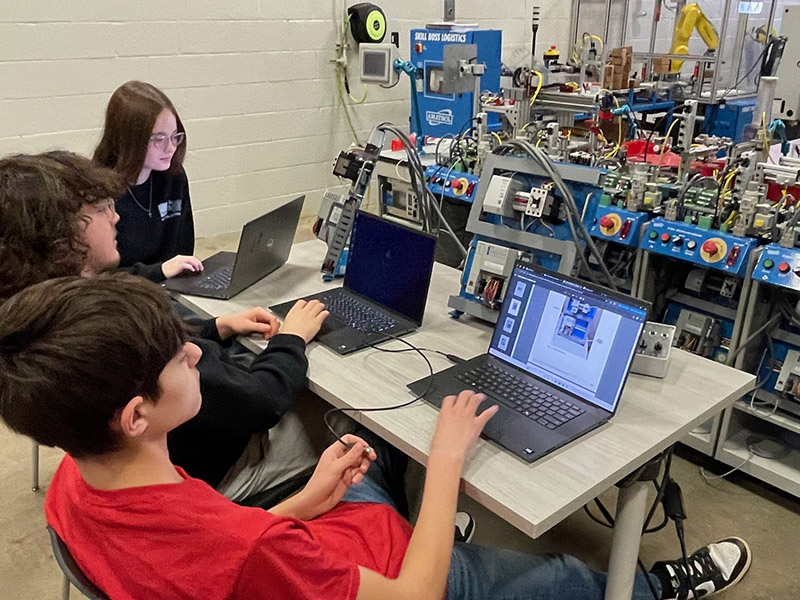
Automation is where Tristan Peterson shines – especially with programmable logic controllers (PLCs).
He’s already earned seven industry-recognized certifications – putting him ahead of many job seekers right out of high school.
“It’s a lot, but once you jump in, it starts to make sense,” Peterson said. “Even if you don’t go into programming, just being able to understand how these systems work is huge. It’s the future of manufacturing.”
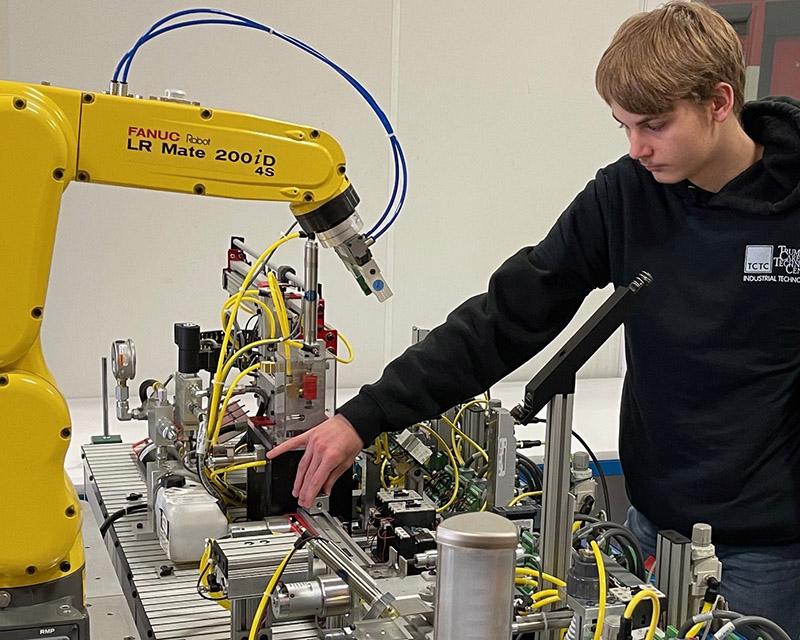
PLCs are used in industrial automation to control machinery and processes. Pettit sees a growing demand for students like Tristan.
“Industry needs people who can troubleshoot and program automation systems. Students who develop those skills will have opportunities right out of high school,” he said.
A career-ready future
Along with Peterson, a few other students will graduate with multiple industry-recognized credentials, making them highly competitive in the job market.
“We know that manufacturing careers today are high-paying, high-tech, and in high demand,” Hertzer said. “For some students, this program is a direct path to a great job right after high school, and for others, it’s a strong foundation for further education. Either way, they’re getting a huge head start.”
sFor industrial technology students, the future isn’t just something they’re planning for, it’s something they’re actively building, one project at a time.
