Categories
Uncategorized

New member spotlight: Everett Industries

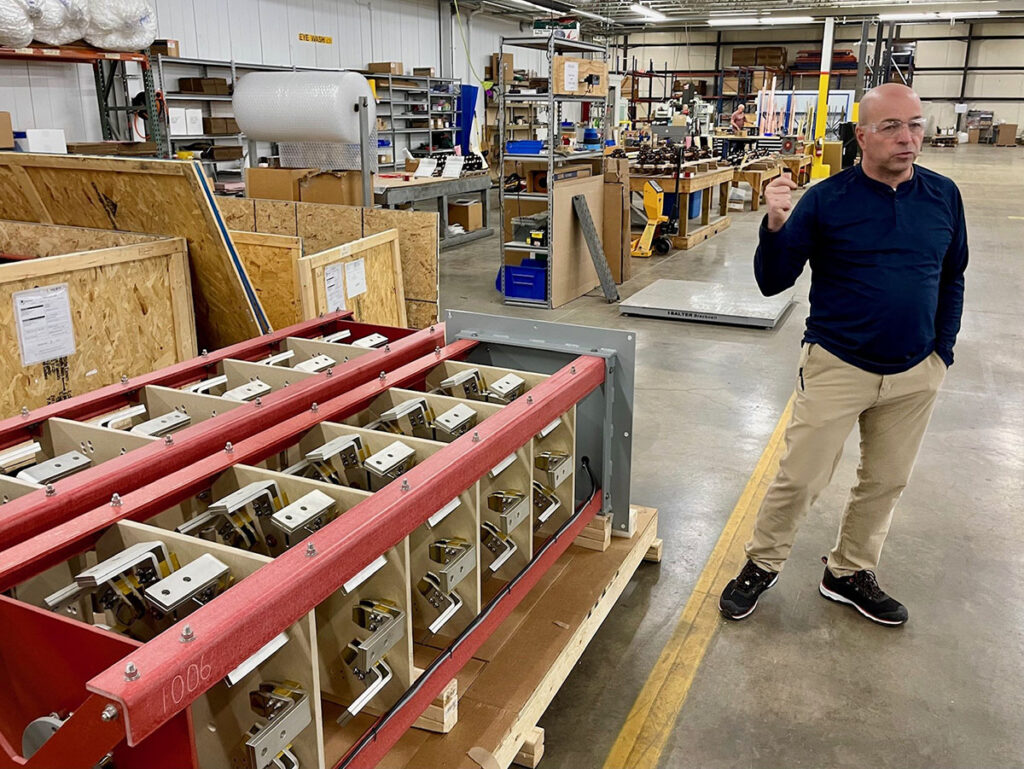
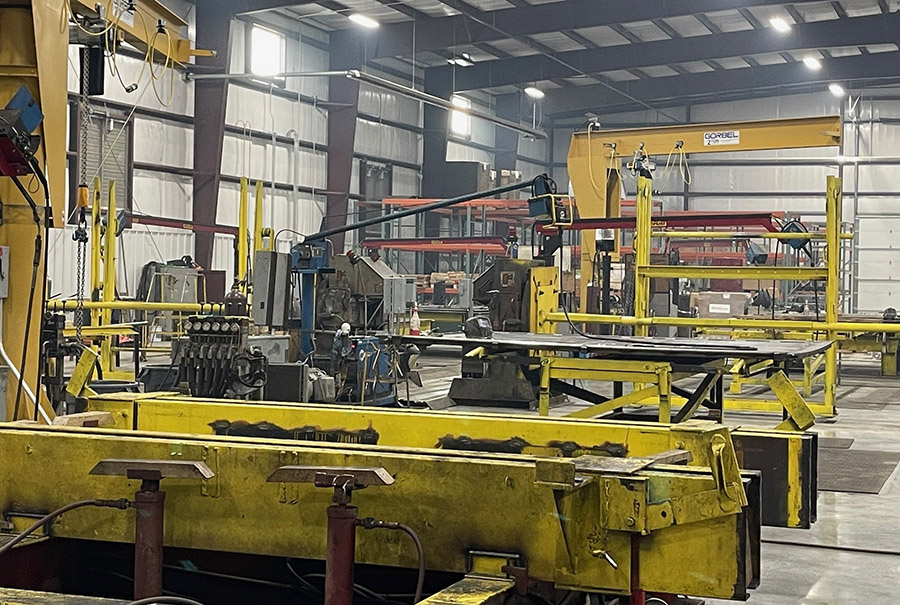
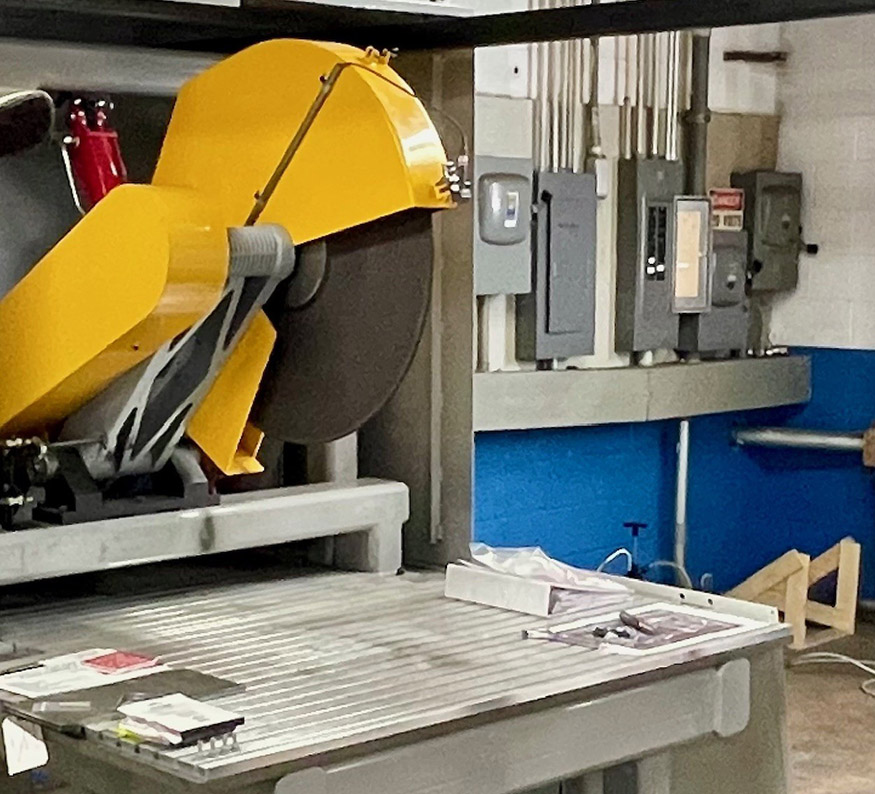
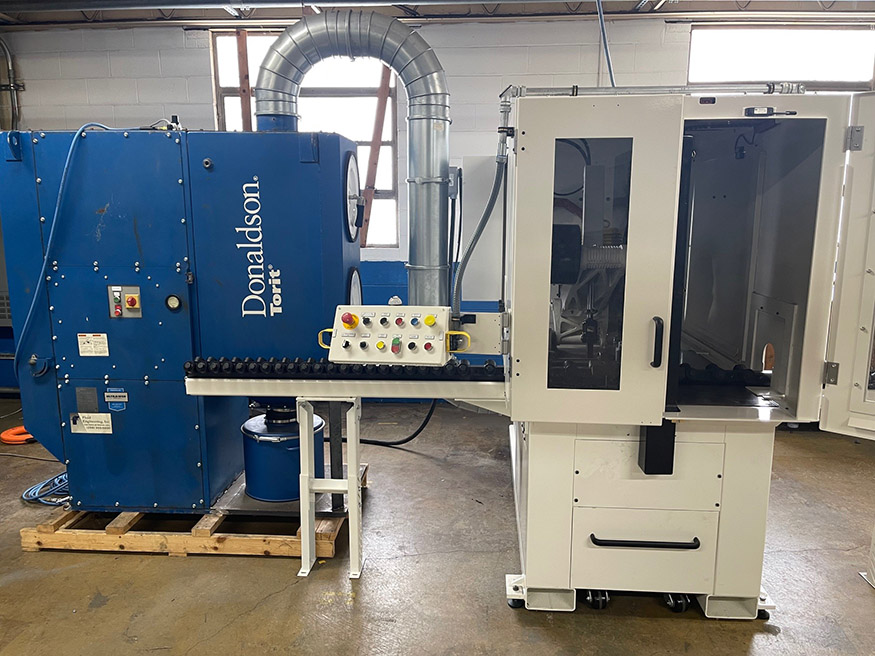
Everett Industries is known for its precision abrasive saws, and it’s working to keep business on the cutting edge under the leadership of the Vosmik family.

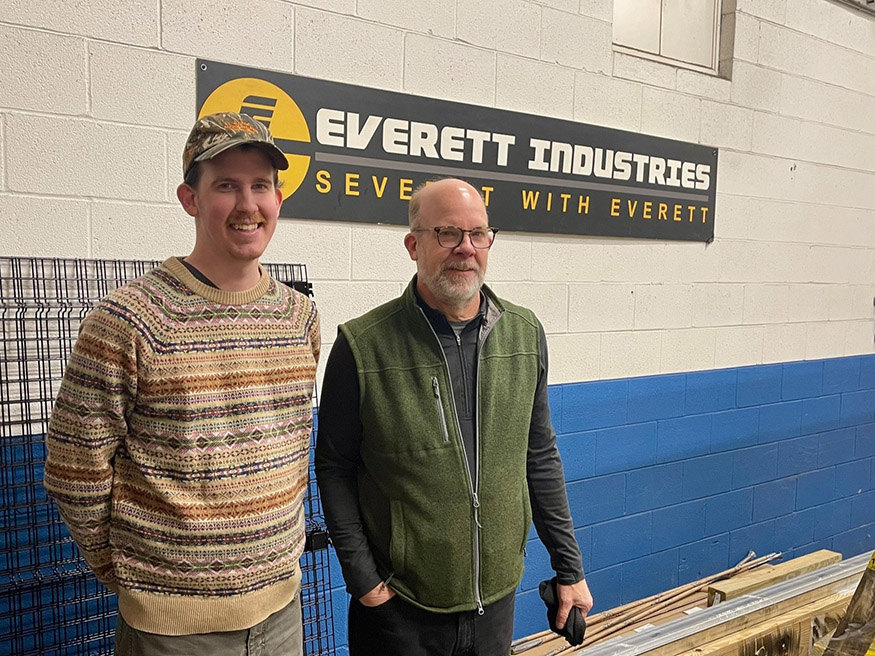
Based in Warren, Everett Industries has grown steadily since Jim Vosmik, the company’s president, purchased it in 2017 from the second generation of the Everett family that founded it in 1962. He has years of experience in manufacturing and automation which laid the foundation for what the company is today.

What began as a five-person operation is now a 16-person team, which includes Jim’s children, Charles and Paige.

A sharp approach

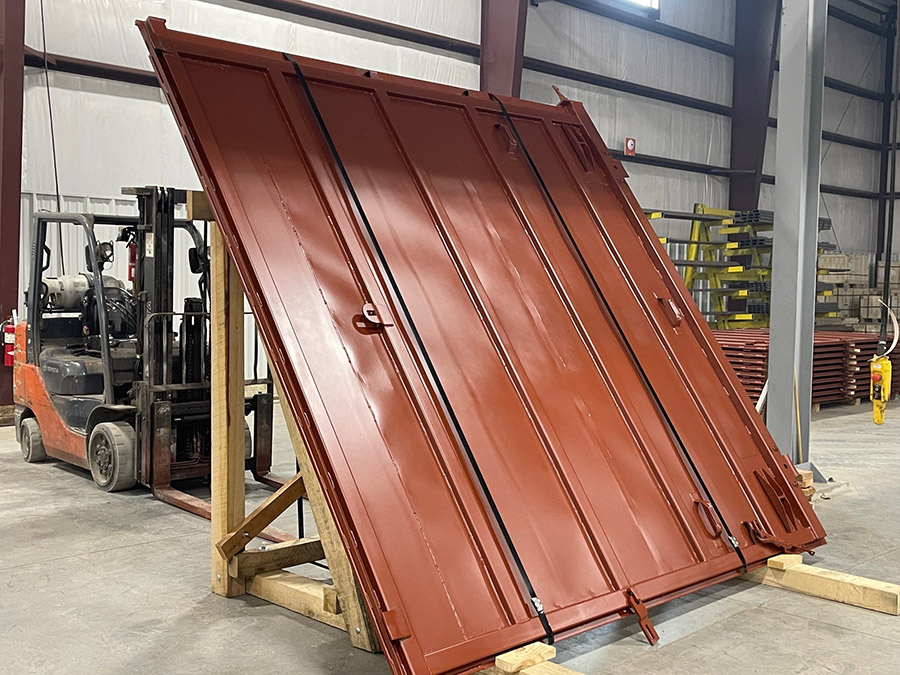
The company’s abrasive saws are used in industries ranging from construction and fabrication to aerospace and automation, with a specialty in cutting hard-to-machine materials.

“Our saws are best for exotic alloys that just can’t be cut with traditional toothed blades,” said Jim Vosmik, president of Everett Industries. “We’re basically grinding through these materials. That’s where our products shine.”

Beyond machines, the company is focused on developing people.

“We’ve had great success hiring individuals with curiosity and grit, then training them up. Some started in high school work-study programs or as mechanics – backyard or formal. We value emotional intelligence just as much as technical skills,” Vosmik said.

Cutting a way forward with MVMC

As the company continues to grow, joining MVMC was a strategic step toward expanding workforce development efforts and leadership training opportunities.

Everett would eventually like to add engineers, project managers and machine builders to the team.

“We’re not big enough to create this on our own. We need to be part of something bigger,” Vosmik said. “MVMC’s connections are helping us breathe life back into workforce development plans.”

That includes supporting a recent high school graduate – now working full-time – who hopes to pursue a machining apprenticeship. MVMC can help guide processes like this through registered apprenticeship pathways and funding support.

Three team members also attended the inaugural Front Line Leadership Training in 2025.

“Everyone who participated came away impressed, and it gave them tools they could put into action right away,” he said.

Vosmik is also deeply invested in reaching students about manufacturing career opportunities.

“You’ve got to get them early. If they have a great experience in high school, it sticks.”

Precision runs in the family

Vosmik’s children, Charles and Paige, are helping to lead Everett into the next chapter.

Each brings a unique background and skill set to the table, contributing in different ways to the company’s focus on innovation, hands-on leadership, and intentional workforce development.

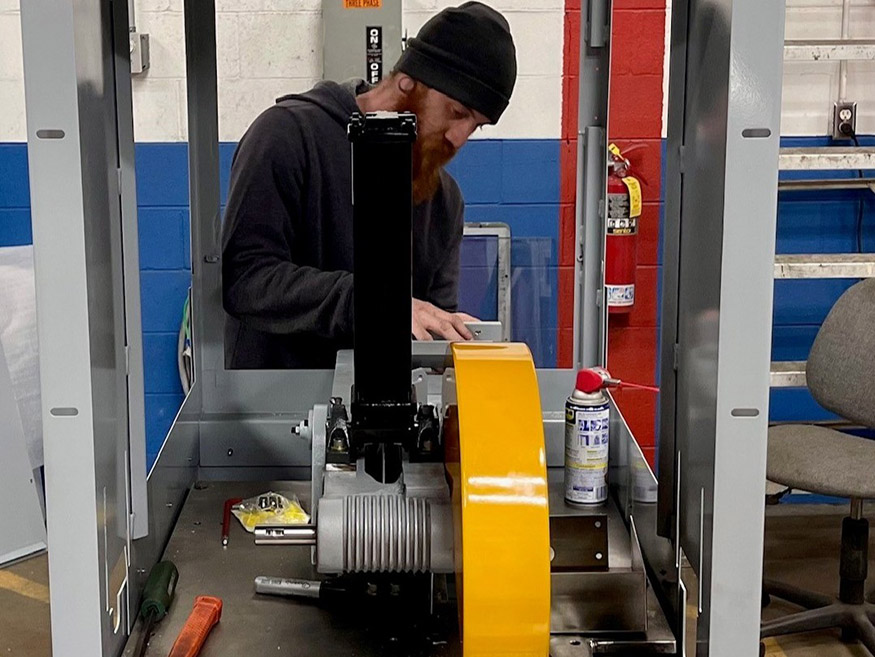
Originally joining as the marketing specialist, Charles soon found himself wiring control panels, assembling machines, and commissioning complete systems.

“Spending nearly a year on the shop floor and in the field gave me a firsthand understanding of how our equipment is built, installed and used,” said Charles Vosmik, sales and marketing/technical systems at Everett Industries. “There’s something uniquely rewarding about walking into a plant and seeing operators who no longer have to lift heavy parts or breathe abrasive dust – and knowing you played a role in making their jobs safer and more productive. At this point, I fully expect to spend my career in manufacturing.”

Paige recently celebrated her one-year anniversary with the company and has taken on a range of technical responsibilities – from improving engineering manuals to machine programming and control systems.

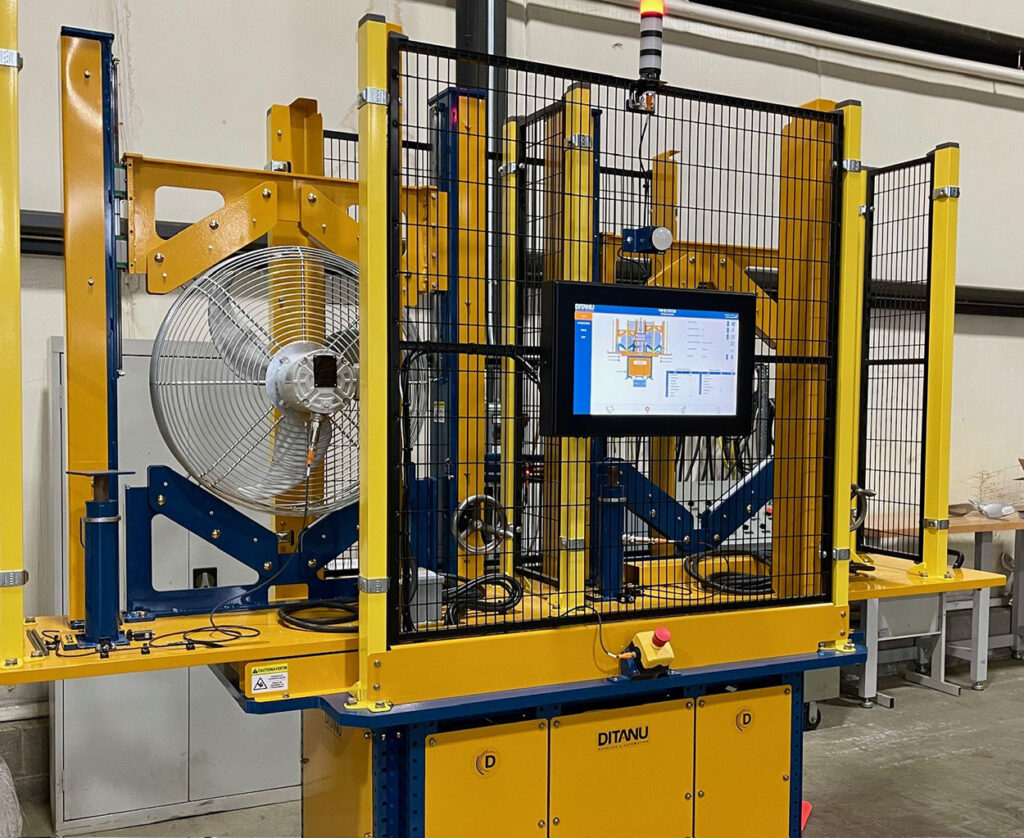
“She’s currently starting up the first complex machine she programmed herself.  It’s a fully automatic, cut-to-length saw that will eventually have an end-of-line robotic finishing cell that she’ll likely program as well,” Jim Vosmik said. 

A shared vision

Everett’s partnership with MVMC will help the company stay connected to resources, peer collaboration and to the broader mission of advanced manufacturing in the region.

The company is not only investing in internal leadership and talent but also strengthening its visibility and voice within the area’s manufacturing network.

As a family-owned business with big goals, Everett understands the value of having a support system while being self-reliant.

“Those who grew up in entrepreneurial families bring an understanding that’s important for success in small businesses – the understanding that no one is coming,” Jim Vosmik said. “You build the systems. You become the leader, and in a small business, that someone is you.”

Categories
Uncategorized

New member spotlight: TTM Technologies

A global leader in printed circuit board (PCB) manufacturing, TTM Technologies, Inc. delivers mission-critical electronics to industries ranging from aerospace and defense to industrial technology.

The North Jackson facility is part of a network of 19 U.S. locations and several international operations, employing 245 people across three shifts.

The plant is focused on growth, innovation and workforce development, positioning itself as a key contributor to the region’s manufacturing strength.

With deep roots in the Mahoning Valley, the company has evolved through several ownerships before becoming part of TTM Technologies.

Today, it continues to adapt to changing market demands, with increasing emphasis on rigid-flex PCBs, which are compact, flexible boards designed to fit into tight or uniquely shaped spaces in modern electronics.

Meshing with MVMC to build talent

The decision to engage with MVMC reflects a strategic commitment to regional collaboration and long-term talent development.

“We see value in being part of a network of manufacturers who are committed to growing and retaining a skilled workforce in our region,” said Rita Tustin, general manager, TTM in North Jackson. 

The company’s hiring priorities include production operators and maintenance technicians.

They have a competitive starting wage and are very proud of their operator advancement program that was rolled out in 2025. This is a pay-for-skills program that drives career development and opportunities for site production operators who train others and are interested in expanding their own knowledge and skills.

Upskilling strategies are important to TTM, along with launching a maintenance apprenticeship program. The team is eager to connect with other MVMC members who have implemented similar efforts.

“In North Jackson, our biggest opportunity is bridging knowledge gaps among our current maintenance team members,” said Tina Parker, HR manager, TTM in North Jackson. “Being part of MVMC gives us access to peer learning and proven workforce development practices.”

The company is also interested in WorkAdvance and seeking assistance with TechCred. MVMC now provides office hours to coincide with TechCred application windows for strategizing training solutions.

Investing in future innovators

TTM is also exploring how to engage younger generations in manufacturing careers and have a stronger community presence. 

“We would love to become more involved in youth outreach efforts aimed at school-aged children and community events that educate kids about career options,” Parker said. “We’re also open to plant tours, attending career fairs and partnering with organizations like Girls in STEM.”

Together, these efforts reflect the company’s broader vision, not just to fill today’s openings, but to help shape the future of manufacturing in the Mahoning Valley.

Categories
Uncategorized

Manufacturing Day events open doors to opportunity for local students

Every October, Manufacturing Day is celebrated across the country as a chance to spotlight the exciting and evolving world of modern manufacturing.

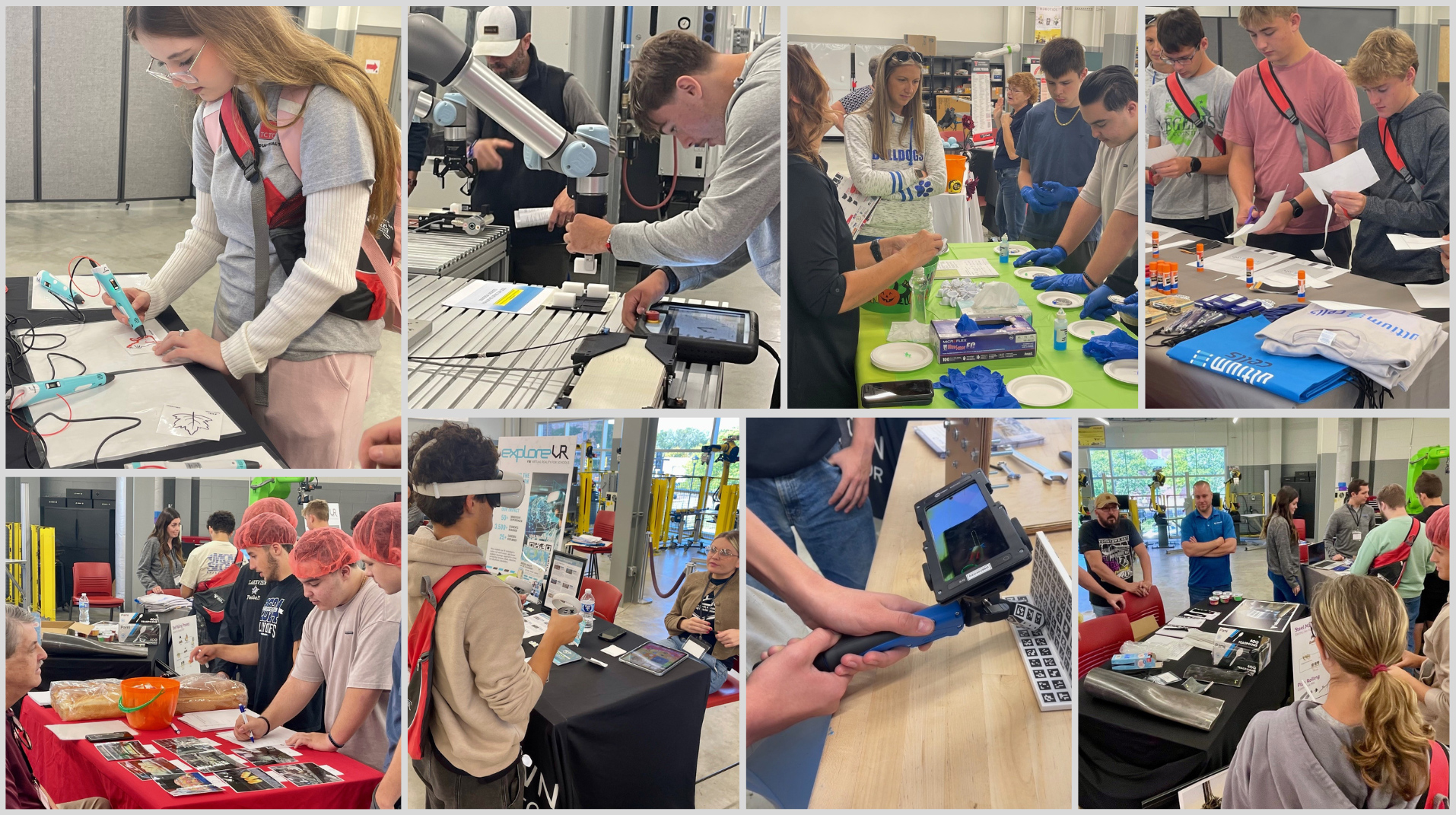
MVMC and YSU’s College of STEM teamed up to host an immersive event on October 3 for at least 70 high school students from Lakeview, Lordstown, MCCTC, Cardinal Mooney, NEO Impact Academy and TCTC  at the Excellence Training Center in Kohli Hall.

Where curiosity meets career

They rotated through hands-on, interactive stations featuring robotics, 3D printing, virtual reality, industrial maintenance, and more. For some students, it may have been the first time they were introduced to these career pathways.

“This is all about showing students what’s possible,” said Jackie Ruller, executive director, YSU Excellence Training Center. “We want them to know it’s not just four-year degrees. They can earn stackable credentials or explore short-term training options that lead to high-demand, high-wage careers right here at home.”

Students were also able to connect directly with representatives from local manufacturers including Hynes, Novelis, Schwebel’s, Ultium Cells and Vallourec, alongside partners like America Makes, NCUS-TEC and the Youngstown Business Incubator.

Jim Goske, director of Whole Child Supports at Campbell Schools, emphasized the long-term value of this exposure.

“When students see more career pathways early on, they’re less likely to feel stuck later in life,” he said. “It’s about giving them hope and direction.”

That message resonated across districts, including in Lordstown, where educators see firsthand how early exposure can shape students’ futures.

“Many of our students are interested in engineering. Getting hands-on with the equipment and talking to industry reps helps them see how their interests can translate into a career,” said Kim Miller, guidance counselor, Lordstown Schools.

Not your grandpa’s factory tour

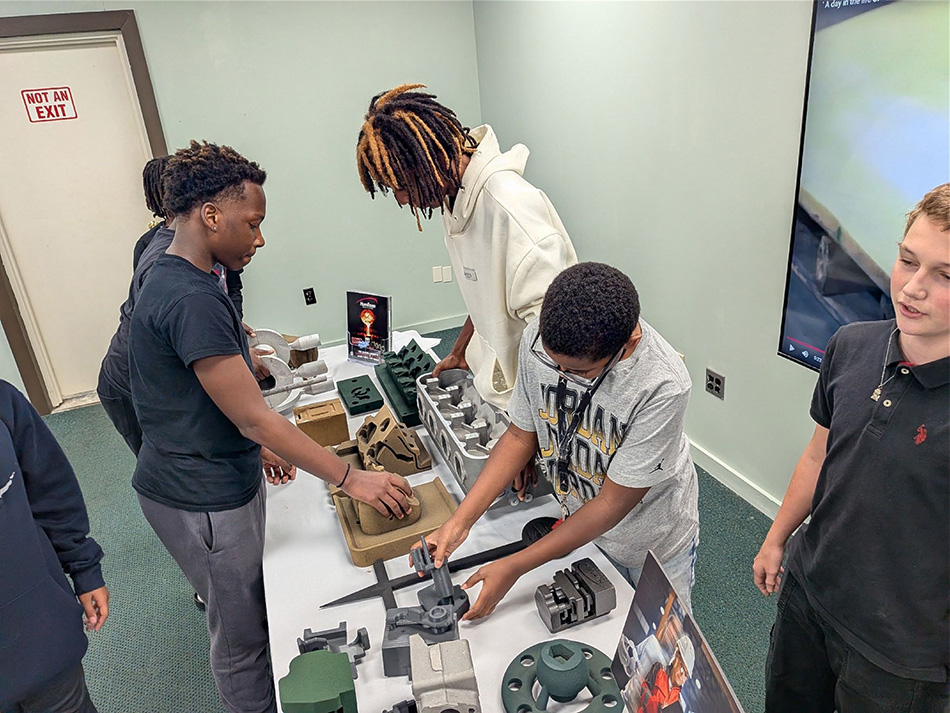
Meanwhile, the same day, MVMC Executive Director Alex Hertzer also visited a Manufacturing Day event at Humtown Products.

Students engaged in 3D printing and advanced casting demonstrations.

“We’re planting seeds that will have a lasting impact,” Hertzer said. “The earlier we create these connections, the more students will see they belong in manufacturing.”

These efforts align with MVMC’s broader youth outreach strategy to bring immersive career awareness into classrooms across the Mahoning Valley. It remains a vital step in building a strong, homegrown talent pipeline for the future.

Categories
Faces of Manufacturing,    Member Manufacturers

New member spotlight: Ajax TOCCO Magnethermic

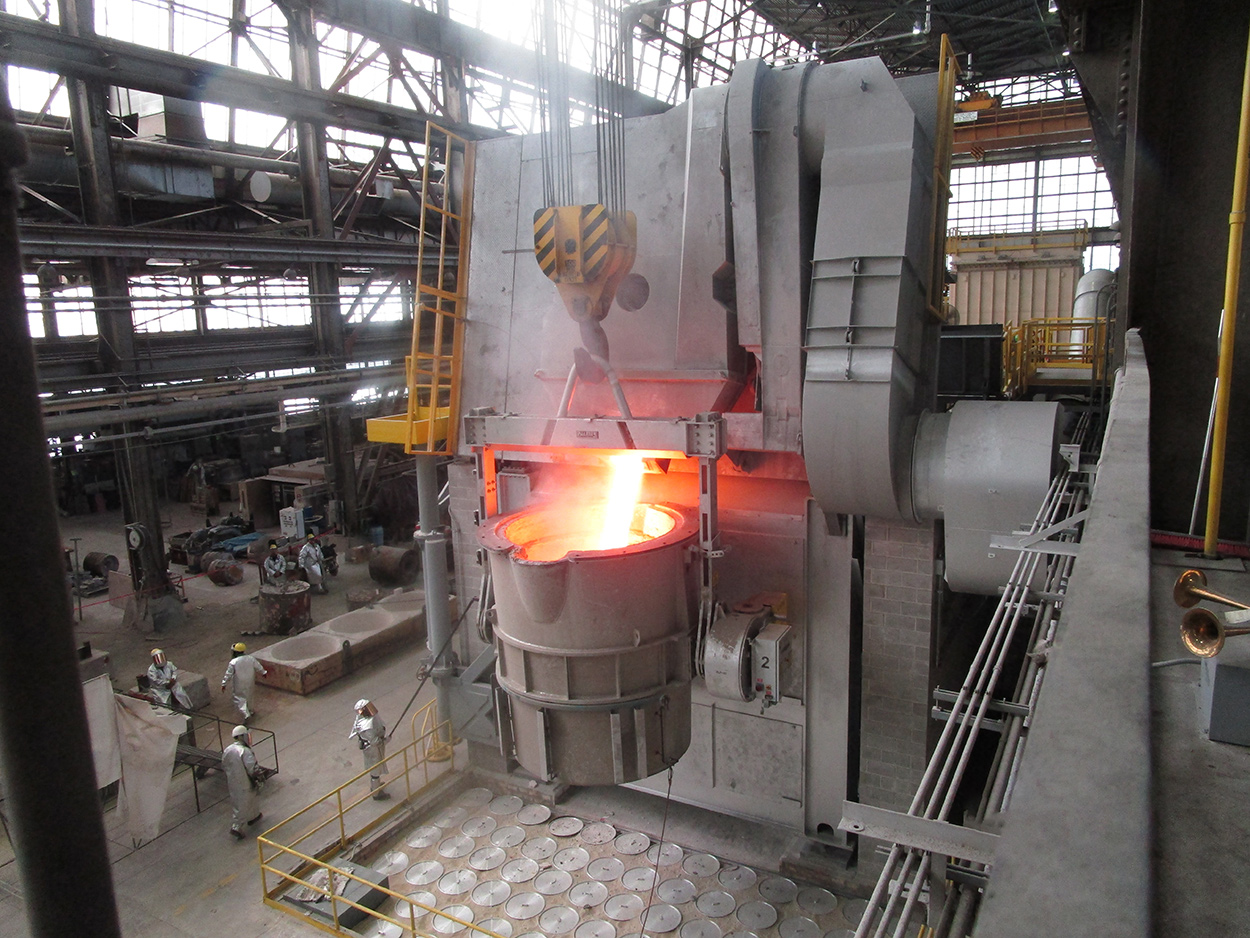
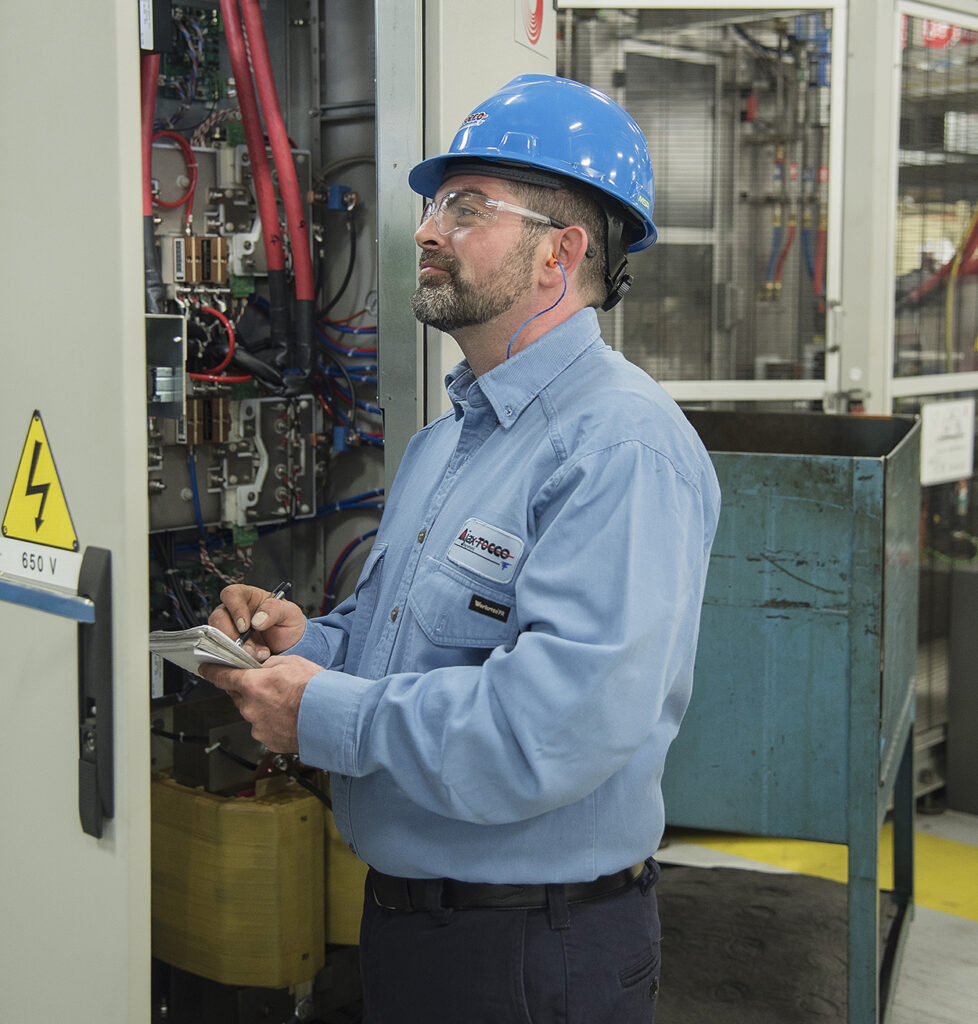
With more than a century of innovation behind it, Ajax TOCCO Magnethermic is a global powerhouse in induction heating and melting systems.

Based in Warren, Ajax TOCCO employs over 350 locally and 1,500 worldwide, serving industries such as automotive, aerospace, energy, electronics and industrial manufacturing.

The company is a world-class OEM that delivers advanced heating solutions to more than 1,000 customers globally, including steel mills, automakers, aircraft manufacturers, and energy producers.

Ajax TOCCO’s technology plays a critical role in the production of parts like gears, shafts, turbine components and transformer coils.

Workforce strategy meets regional collaboration

Like many manufacturers in the Mahoning Valley, Ajax TOCCO faces ongoing challenges in building and maintaining a skilled workforce.

The company currently has about 60 openings across the U.S. Positions include mechanical and electrical assembly, coil fabrication, engineering, project management, quality assurance staff, field service technicians, and more.

“This is a niche industry, and success depends on people who are willing to learn and grow,” said Drew Beatty, plant manager at Ajax TOCCO. “MVMC brings manufacturers together to solve these workforce challenges, and we want to be part of that conversation.”

The company’s recent growth makes its partnership with MVMC especially timely.

Ajax TOCCO recently secured one of the largest orders in its history, requiring facility expansion, a shop-floor reconfiguration, and most importantly, an influx of skilled talent.

“It’s driving us to expand our test capacity and reconfigure our shop layout. This is a huge job that will keep us busy for years and require more skilled people to get it done,” said Beatty.

MVMC as a partner for progress

Starting wages for shop floor roles begin at $18–$20 per hour, with clear advancement paths for those ready to grow in their careers.

“The company prioritizes helping employees shift into new areas as their careers evolve,” said Krystal Schulz, human resources manager.

Ajax TOCCO’s leadership is confident that its MVMC membership will help connect the company to valuable regional partnerships and job seekers.

“The challenge is finding and developing the skilled workforce needed to keep up with the demand,” said Aaron Reihard, production manager at Ajax TOCCO. “MVMC gives us a way to connect with the right partners and job seekers.”

With expansion projects underway and steady customer demand, Ajax TOCCO’s partnership with MVMC will help ensure local talent fills meaningful roles.

“What we do is highly skilled and unique,” said Beatty. “There are tremendous opportunities for growth locally, nationally, and internationally.”

Categories
Community Partnership

Careers of the future are made in Choffin’s new advanced manufacturing lab

Choffin Career and Technical Center’s new advanced manufacturing lab is a major step forward in preparing future generations for the workforce, and MVMC helped make it possible.

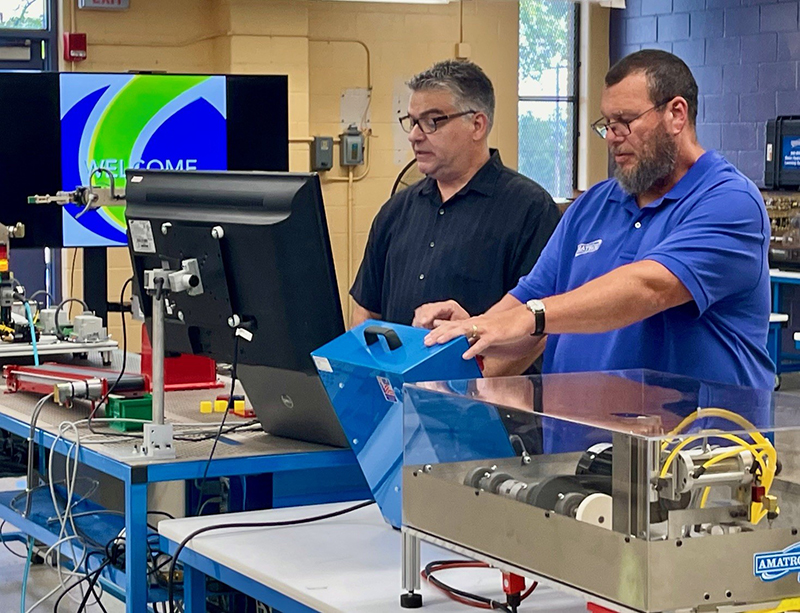
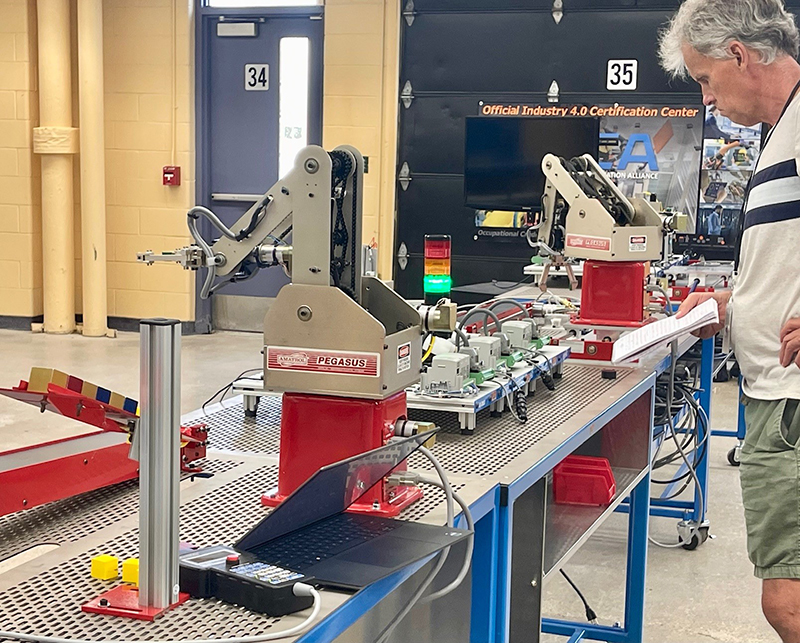
The media was invited to an official unveiling ceremony on August 27. Through funding from the state, MVMC contributed $10,000 to relocate AMATROL equipment from East, Chaney and Wilson high schools and transform an old storage space into a state-of-the-art lab.

Where learning gets real

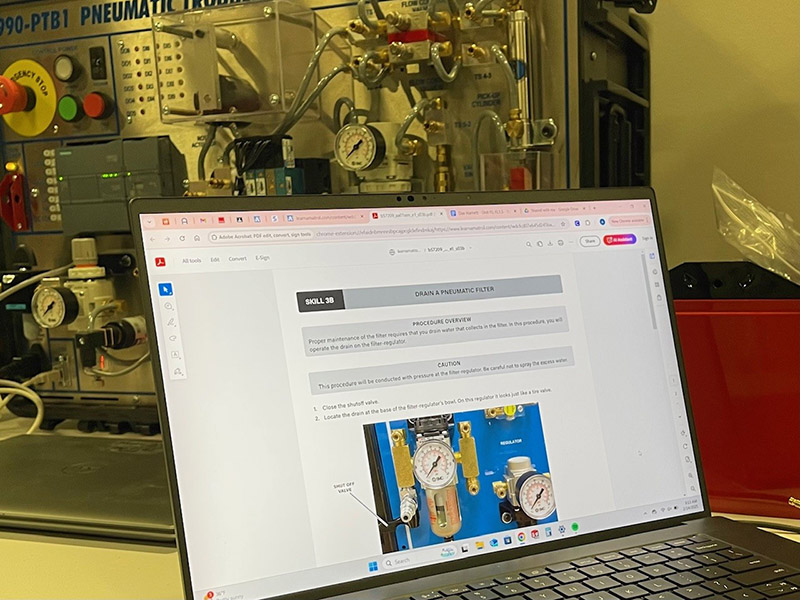
At least 35 seniors and 15 juniors are enrolled in the program for the 2025-2026 school year. They’re getting hands-on, high-tech training in areas like robotics, pneumatics, electrical and programmable logic controls (PLC).

“Youngstown has been a little bit of a desert with the advanced manufacturing side of our industry,” said Dr. Michael Saville, director, Choffin Career and Technical Center. “Bringing this under the career-tech umbrella gives it the full support, structure and accountability it deserves and connect students to the industry.”

MVMC exists to strengthen the education-to-workforce connection.

“When you talk to manufacturers, their biggest need is people who can keep machines running, who understand how to troubleshoot and improve operations. That’s what this lab is all about,” said Alex Hertzer, MVMC Executive Director.

The course was originally offered in the Youngstown schools as a 45-minute elective. Now, that’s changing with the program at Choffin.

“We now have two-and-a-half-hour sessions,” said Jim Alexi, lab instructor. “We have time to teach the skills that really stick, and these students are getting job ready.”

Skills that meet the moment

Students can earn industry-recognized credentials that help them stand out in the job market.

Hertzer added that mid-skill careers, such as maintenance technicians and entry-level engineers, are vital to production lines.

“The skills students are going to learn in this room are cross-cutting sectors. Whether it’s food production, steel or aerospace, these are capabilities that employers need right now,” he said.

The lab is more than just a classroom. It’s a working replica of a modern shop floor with equipment that technicians would use every day.

Along with the concepts of Industry 4.0, students are getting lessons beyond that.

“We’re moving toward Industry 5.0, incorporating artificial intelligence into these systems,” said Patrick Dinapoli, lab instructor. “Students are getting early exposure to the technologies that will define the next generation of manufacturing.”

Education to workforce connection

MVMC members are also intrigued by the lab. Representatives from Schwebel’s were there to check out the space and expressed the desire to engage with students going through the program.

“We need this generation to understand what work means and looks like,” said Melinda Rombold, HR director, Schwebel’s. “Workforce development is so critical, and not just on the technical side. We spend a lot of time talking about job readiness, and programs like this are exactly what we need.”

Creating a direct pipeline from the classroom to career has never been more urgent, and MVMC is committed to that effort.

“We couldn’t pass up the chance to support a program like this,” Hertzer said.

While it’s been a great start for Choffin, leaders are looking ahead to a promising future.

“We’re actively promoting the program and expect enrollment to grow in the coming years as more students see the opportunities this training opens up,” Saville said.

Categories
Community Partnership

Learning by doing: TCTC industrial tech students build skills that open doors

The inaugural class for the industrial technology program at Trumbull Career and Technical Center will take skills learned in the classroom into real life after graduation.

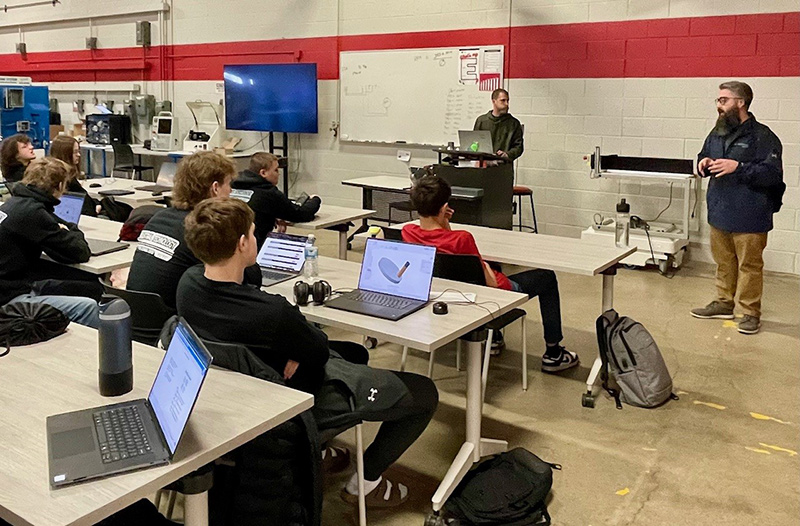
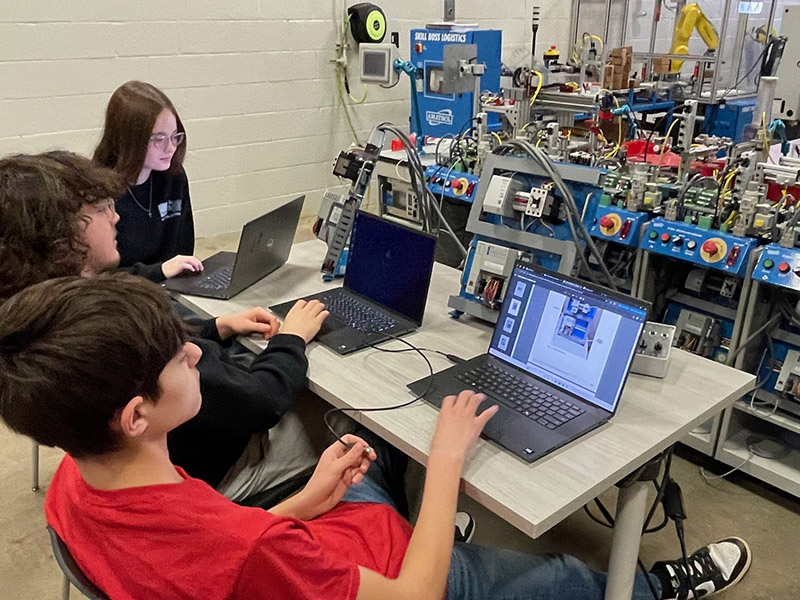
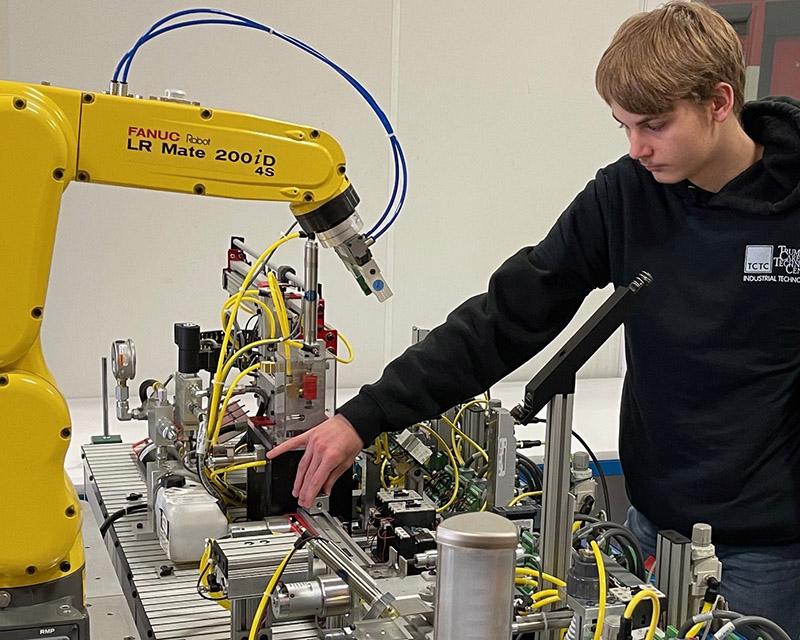
It’s designed to give students hands-on experience in machining, robotics, electrical systems, automation, and more. These skills stand out for employers looking to hire.

“This program is a huge advantage for students,” said Alex Hertzer, MVMC executive director. “They’re not just learning about manufacturing – they’re doing it. That experience could change the trajectory of their lives.”

A well-rounded foundation

There are several stations that students rotate through in the program. Each one builds critical industry skills.

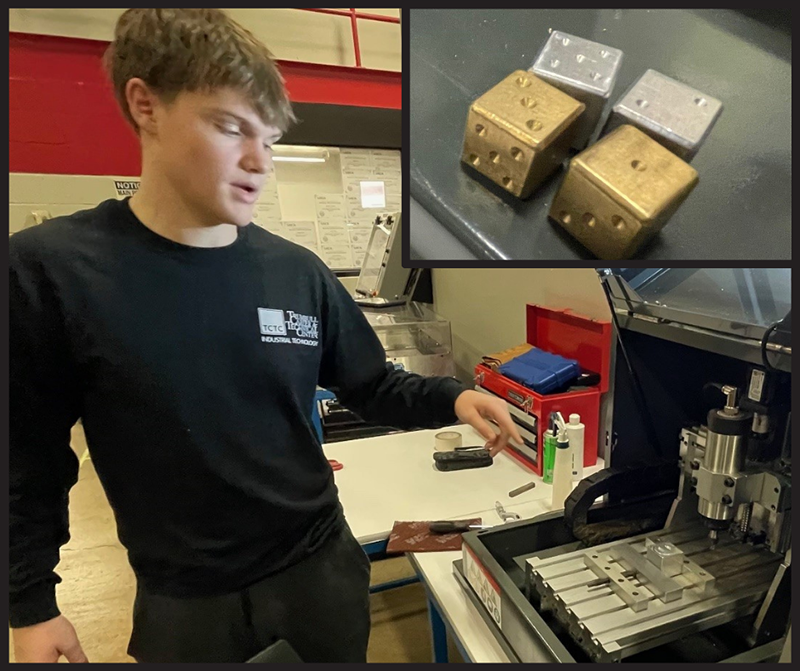
For example, the machining area introduces students to manual and CNC machining. They also interact with programmable logic controllers (PLCs), pneumatics, hydraulics and electrical systems.

“The goal is to expose them to everything. A lot of students come in not knowing exactly what they want to do,” said John Pettit, TCTC industrial technology instructor. “Here, they get a taste of multiple career paths before deciding where they want to specialize.”

Dirt bike repairs develop real-life skills

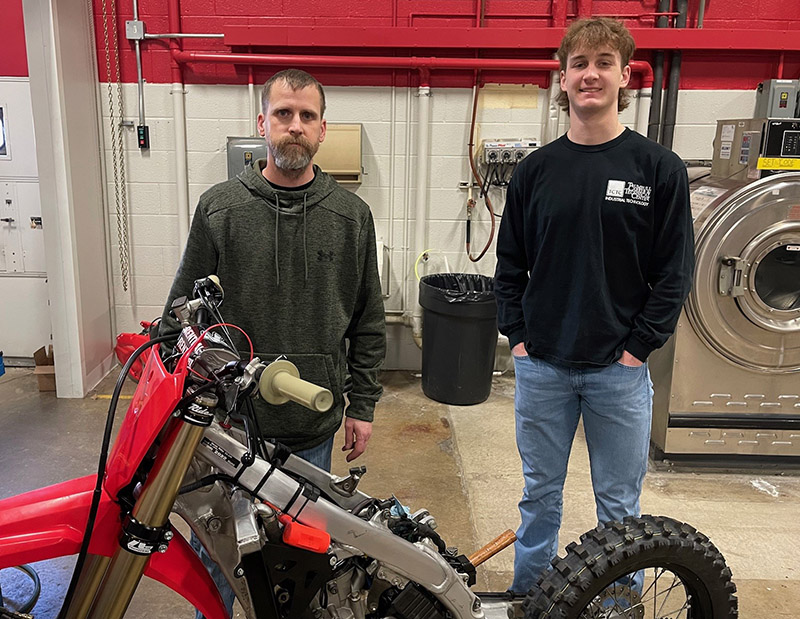
Ryan Church has a passion for motorsports. He’s interested in machining, but when his dirt bike’s suspension needed repaired, he realized how well it connected to the hydraulics lessons in class.

“After I got this bike, it was stolen. When I got it back, the suspension was completely shot,” he said. “I talked with Mr. Pettit, and he told me the suspension falls under hydraulics, so we went through that material and redid my whole suspension.”

Beyond fixing his bike, Ryan sees the long-term value of these skills. His family owns Church Boys Racing, a shop specializing in Chevy Nova front-end parts. Ryan hopes to eventually bring more machining work in-house.

“If I need something made, I can do it,” he said. “That’s what I love about machining.”

Best of both worlds

For some students, like Dax Harnett, college remains a first choice after graduation. However, he finds value in learning about machining.

One of his favorite projects was crafting a set of metal dice.

“Even if I don’t go into machining as a career, I know this experience is going to help me,” he said. “It teaches problem-solving and attention to detail—things that are useful no matter what I do.”

Aleia Lambert ultimately wants to attend college as well – but is focused on robotics in the program. She has family members with a background in the trades, so the industry has always been familiar.

“I love robotics, and I know this experience will help my journey, wherever that ends up leading,” she said.

Being the only female in the program isn’t getting in her way either.

“She’s proving that manufacturing isn’t just for guys, it’s for anyone who’s willing to learn and put in the work,” Pettit said.

Programming success

Automation is where Tristan Peterson shines – especially with programmable logic controllers (PLCs).

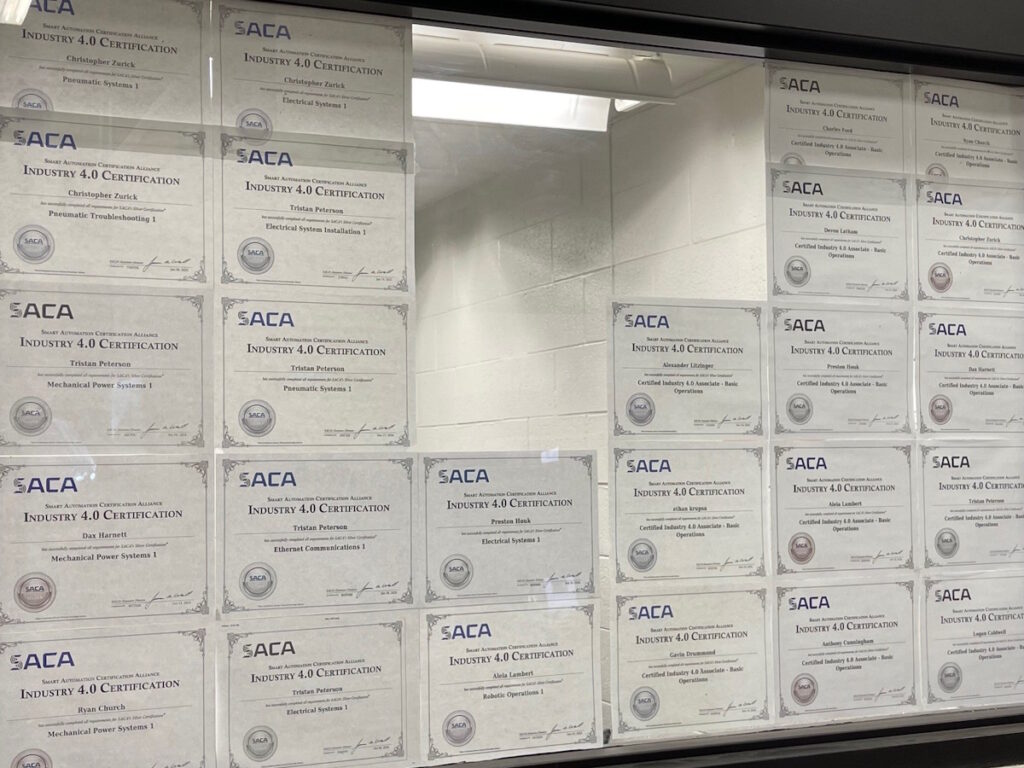
He’s already earned seven industry-recognized certifications – putting him ahead of many job seekers right out of high school.

“It’s a lot, but once you jump in, it starts to make sense,” Peterson said. “Even if you don’t go into programming, just being able to understand how these systems work is huge. It’s the future of manufacturing.”

PLCs are used in industrial automation to control machinery and processes. Pettit sees a growing demand for students like Tristan.

“Industry needs people who can troubleshoot and program automation systems. Students who develop those skills will have opportunities right out of high school,” he said.

A career-ready future

Along with Peterson, a few other students will graduate with multiple industry-recognized credentials, making them highly competitive in the job market.  

“We know that manufacturing careers today are high-paying, high-tech, and in high demand,” Hertzer said. “For some students, this program is a direct path to a great job right after high school, and for others, it’s a strong foundation for further education. Either way, they’re getting a huge head start.” 

sFor industrial technology students, the future isn’t just something they’re planning for, it’s something they’re actively building, one project at a time.

Categories
Member Manufacturers,    Uncategorized

From classroom to career: TCTC breaks molds with industrial technology program

Trumbull Career and Technical Center’s industrial technology program is opening doors to exciting, in-demand careers in manufacturing.

It offers hands-on lessons, problem-solving and access to cutting-edge equipment.

The program launched in the 2024-2025 school year with 13 students participating. They’re earning industry-recognized credentials with a direct pathway into the workforce.

Laying the groundwork

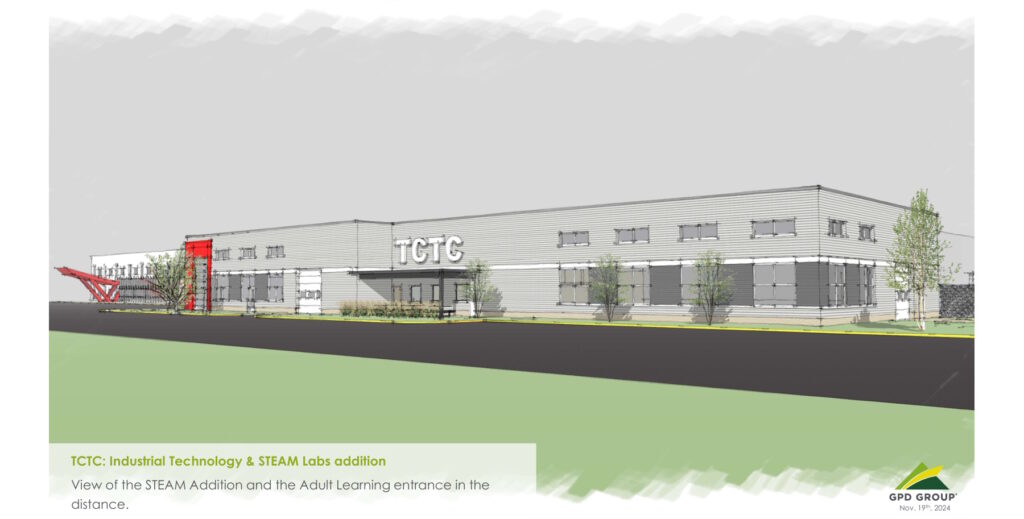
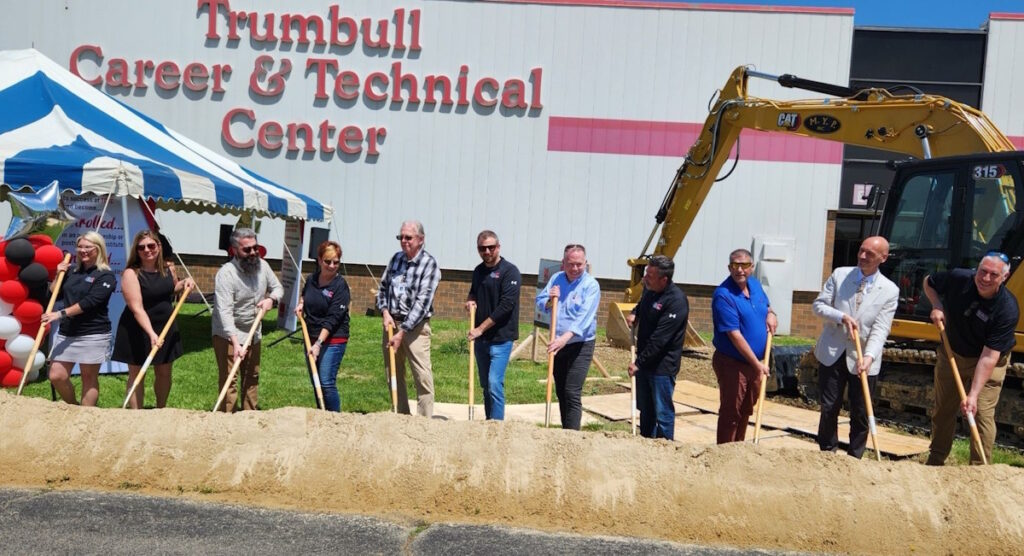
The industrial technology program is part of an expansion of TCTC’s workforce development services. A groundbreaking ceremony was held in May 2025 for a new training and resources center, which is set to open in fall 2026.

The funding comes from a $5.2 million Appalachian Community Innovation Centers grant, and another $2.5 million state grant for equipment.

“Without the support of MVMC, we probably wouldn’t have been able to secure the funding,” said Anina Karlovic, TCTC career tech supervisor.  

As manufacturers face a growing need for skilled workers, the program is designed to bridge the gap, preparing students to step directly into careers in machining, hydraulics, robotics, and more.

With strong industry support and a customizable curriculum, TCTC is redefining what career and technical education can offer.

Hands-on learning for real-world careers

Unlike traditional classroom settings, TCTC’s industrial technology program puts students in charge of their learning, allowing them to tailor their education to their unique career interests.

“We don’t force students into a one-size-fits-all model,” said John Pettit, TCTC industrial technology instructor. “If a student is passionate about robotics, they can focus on that. If they love machining, they can earn multiple machining credentials. The goal is to make sure they leave here not just job-ready, but excited about their future.”

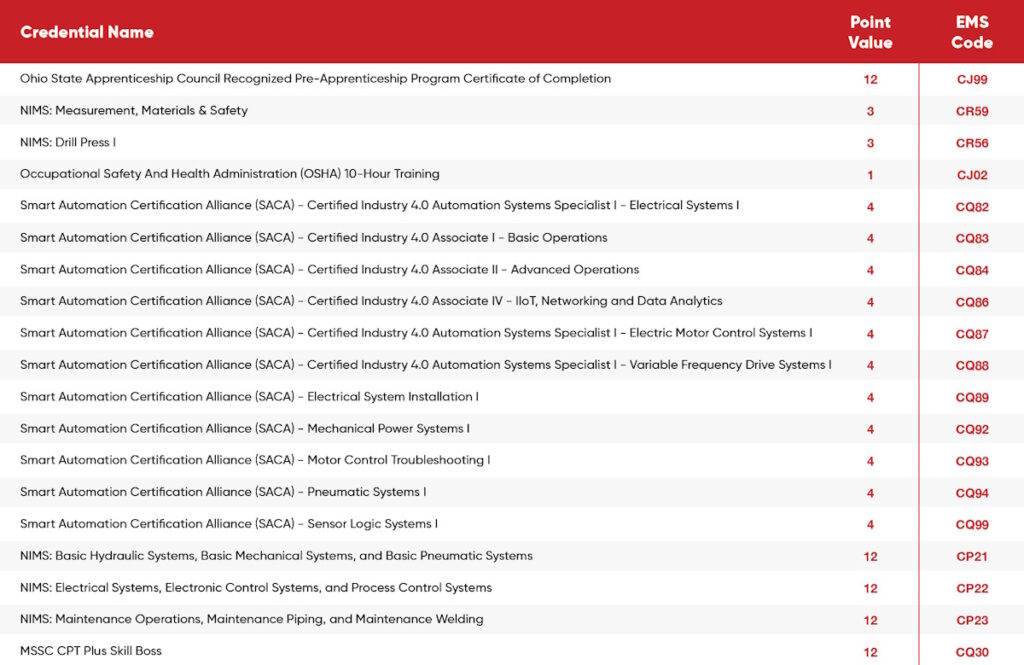
The program offers 111 industry credential points, allowing students to gain certifications in:

  • Hydraulics and pneumatics
  • Electrical systems and motor controls
  • Machining and CNC programming
  • Industrial maintenance and mechatronics
  • Welding and safety compliance

By the time students graduate, they have a resume filled with credentials that employers recognize and value, making them highly competitive in today’s job market.

“I don’t want students to just memorize information. I want them to actually understand how things work, how to solve problems and troubleshoot,” Pettit said.

One of his students recently put these skills to the test by designing and machining custom wrenches to work on his dirt bike.

“He programmed them, cut them, and then used them to take his bike apart. That’s the kind of real-world application that makes learning exciting,” Pettit said.

Importance of employer participation

TCTC’s program is also a game-changer for local manufacturers seeking skilled workers. Foxconn and Dinesol Plastics have already interacted with students, providing hands-on exposure to manufacturing careers.

“The success of this program depends on industry involvement,” said Paula Baco, TCTC director. “We’re building the next generation of skilled workers, and we need local employers to help shape that workforce by engaging with our students early and often.”

For employers, this is a golden opportunity to invest in the workforce of tomorrow by partnering with TCTC.

“The program is producing motivated, highly skilled young professionals that have customized career pathways that align with company needs,” said Alex Hertzer, Executive Director of MVMC. “Employers who engage with these students now will have a direct pipeline to the best talent in the region.”

The industrial technology program is not only an education, but also a launchpad for students to step into the best possible careers in modern manufacturing.

Categories
Member Manufacturers

New member spotlight: PHD Manufacturing

For PHD Manufacturing in Columbiana, joining MVMC was a calculated move to tackle a pressing challenge shared by many in the industry, finding skilled workers and expanding recruiting reach.

“We need to get our name out there and find more people,” said Jim Hlebak, executive vice president, PHD Manufacturing. “We joined MVMC to connect with a broader network and tap into the resources that help companies like ours recruit, train and retain manufacturing talent.”

Proudly built in the USA

Founded in 1972, PHD Manufacturing has become a leading U.S. supplier of pipe hangers, pipe supports, and strut accessories with 150 employees.

Serving the commercial and industrial construction markets, the company takes pride in keeping its manufacturing operations domestic.

“We are 90 percent manufacturing with only 10 percent of imports, so we get to call our products domestically made in the USA,” Hlebak said. “Our products are made, melted, slit and coated entirely in the U.S., which sets us apart.”

PHD ships its products from Columbiana to distributors and job sites nationwide.

“When tariffs hit, our customers look to us because we’re not reliant on overseas manufacturing. Being fully domestic is a strategic advantage.”

Occasionally, the company does international business, which has included Canada, UAE and Mexico.

Expanding reach with MVMC

When it comes to workforce challenges, PHD faces similar issues like other manufacturers. Many current employees are nearing retirement, and with a smaller talent pool, there’s an urgent need for skilled, entry-level workers.

“We’ve been in Columbiana for over 45 years, but our immediate area is aging. We’ve been trying to reach out to areas like Boardman, Salem and Canfield to find people,” Hlebak said.

Hlebak attended his first MVMC all-member meeting just weeks after joining and immediately saw the value in collaboration.

“It was nice to see how many manufacturers are actually in the Youngstown area working together to solve some of the same problems.”

Getting connected, staying competitive

PHD is already feeling the impact of MVMC’s resources. Hlebak now has a list of contacts and programs to reference, including WorkAdvance, TechCred, Flying High, Columbiana County Port Authority, Lake to River, Ohio Department of Veterans Services, Mahoning Valley Works and JobsNow.

“It was stuff I didn’t know existed. That guidance gave me the next steps to help bring in more employees.”

Becoming a member means the company reaps the benefits of increased visibility through a careers page on MVMC’s website.

“We’re always looking to fill openings for press roll formers and welders,” he said.

Along with long-term workforce development, PHD also aligns with youth outreach efforts and raising awareness about careers in manufacturing.

“Kids today don’t have to move away or go to college to build a successful career,” Hlebak stressed. “There are real opportunities for them right here in the Valley.”

Being part of MVMC, the company is not just addressing workforce needs, it’s also helping to shape the future of manufacturing in the region.

Categories
Faces of Manufacturing,    Member Manufacturers

New member spotlight: Ashore Manufacturing Group

It’s the early days for Ashore Manufacturing Group, but founder Zachary Woods already has a clear direction and big plans for the Mahoning Valley.

While the company doesn’t have an established facility yet, the strategy is to build a lean, high-tech manufacturing operation centered on CNC machining, additive manufacturing, with future plans to integrate robotics and AI.

Slow and steady to build for success

Woods has his sights set on producing parts for aerospace, defense, mining and medical industries.

“I’m from the Youngstown area, went to Ursuline, and studied infrastructure finance,” he said. “After several years in infrastructure private equity, I wanted to apply what I’d learned to a business of my own – one that would support reshoring and high-value, complex manufacturing here in the U.S.”

That vision is taking shape, but not through rapid growth or big upfront investments. Woods is focused on building credibility, relationships, and real capability – knowing that long-term success doesn’t come from speed alone.

“You can raise a ton of Wall Street capital, build a massive facility and buy a bunch of machinery, but if you don’t have the relationships, and you haven’t built up your qualifications and reputation over time, you’re going to struggle.”

Industry connection through MVMC

That belief in relationship-building is exactly what led him to MVMC.

“MVMC is known for creating those essential connections,” Woods said. “Joining made sense from day one. This isn’t about building fast—it’s about building smart, and that starts with plugging into the right network.”

Ashore’s launch strategy begins in 2025 with a 10-person team focused on establishing a “minimum viable operation.”

In Q4, the company plans to hire CNC machinists, additive manufacturing technicians, a robotics/AI specialist, and administrative staff to build out its core capabilities and start preparing for contract bidding.

By 2026, Ashore will operate from a 100,000-square-foot facility in Youngstown, secured through an equity-in-lieu-of-rent arrangement. With a revenue target of $5 million in its first full year, the company will rely on CNC for higher volume work and additive manufacturing for its higher-margin, lower-volume offerings.

“We’re building something sustainable, not just flashy,” Woods stressed. “The real value is in capability and credibility.”

Categories
Faces of Manufacturing

Faces of Manufacturing: How tinkering led local woman into leadership at Vallourec

As a child, Julie Sole remembers having diverse interests. One day she was building electrical circuits with her dad, and the next was writing multi-chapter stories about adventurous mice.

That time could be seen as a foreshadowing of her career in the manufacturing industry.

Sole grew up in Youngstown’s Brownlee Woods neighborhood and watched her dad’s career path morph over the years. He started in electrical engineering, then was a radio DJ, marketer, banker and eventually a business instructor at YSU for 20 years before retiring.

It was a firsthand look at how many directions a career can go – and planted seeds that would shape Sole’s own decisions.

“I loved storytelling just as much as I loved working with those little electrical kits,” she recalled. “The path was never clear-cut for me.”

However, those early tinkering sessions sparked a connection to how things work and the skills that can open doors.

Uncertainty still leads somewhere

During her high school years at Cardinal Mooney, Sole continued struggling to decide on a career path. Her dad suggested taking a focus test, which she did, but the result didn’t help much.

“My top two matches, which were writing and engineering, were almost identical in score. It just confirmed what I already knew – I had no idea which direction to go.”

Although she loved writing, upon graduation, she chose civil engineering because of the flexibility.

“There are a variety of areas – structures, environmental and geotechnical. I didn’t want to be boxed in, and this gave me options.”

Sole then pursued a bachelor’s degree at YSU, and while there, she got an internship at Vallourec as an engineering consultant.

Two years in, she was hired full-time as a continuous improvement analyst, which came with learning moments since her experience was limited in industrial engineering.

“In my interview, someone mentioned they had a black belt, and I made a karate joke. I didn’t realize at the time they were talking about Lean Six Sigma,” she said.

Lean Six Sigma is a process improvement methodology used in manufacturing to boost efficiency and reduce waste. Sole earned that black belt status in 2014, plus got certified as a project management professional.

Challenges that create growth

In 2016, she was offered a role in managing capital investment projects at Vallourec. At first, she turned it down.

“I didn’t have a finance background, and I’m not a spreadsheet person. However, my boss told me it wasn’t just budgets, it was about bringing project management skills and engineering insight to the role.”

That shifted Sole’s perspective, and she accepted the position. Soon after, she found herself with more responsibility when her manager stepped away due to an illness – and later passed away.

“I didn’t feel ready, but I had to figure it out. That challenge changed everything for me.”  

Her interest in the bigger picture grew, and she went on to earn a master’s degree in business at YSU, which helped sharpen the financial and strategic skills she uses every day.

Five years later, she was promoted to North America CapEx manager, in charge of multi-million-dollar projects for Vallourec across the U.S. That opportunity then evolved into her current role as director of the North America CapEx office.

From plant upgrades to equipment installations, Sole keeps budgets and timelines on track and makes sure each project aligns with Vallourec’s long-term operational strategy. That involves frequent collaboration with international colleagues to get it done.

“I’ve gone from being nervous to speak in front of a few people to leading global calls. It’s been quite a journey,” she said.

Invested in industry and community

Beyond her work duties, Sole’s leadership extends to Vallourec’s community outreach program, which she helped launch. It connects employees to volunteer opportunities and local causes.

She also serves on the board for MVMC and Youngstown CityScape – and is part of the Leadership Mahoning Valley Class of 2025.

“It’s important to me to be involved in the community in ways that make a difference.”

That also includes participating in a number of MVMC-supported youth outreach events and presentations.

Sole has simple advice for young people when it comes to weighing options in manufacturing or STEM careers.

“You don’t have to be an expert on day one. Be curious. Be willing. That’s enough to get you going.”

Developing valuable skills is powerful, and she’s learned that through experience.

“Manufacturing isn’t just about machines – it’s solving problems, leading teams, improving systems and is full of possibilities.”

Sole’s story is proof that an uncertain start doesn’t mean a limited future. One thing is for sure, she won’t be slowing down anytime soon.

“I’ve grown a lot, but there’s still a lot to accomplish at Vallourec. I’m excited for what’s ahead for the company.”